In Brief
- Red sprites are large-scale electrical discharges that occur 50 to 90 kilometers above storm clouds, lasting only a fraction of a millisecond.
- Powerful lightning strikes trigger these upper-atmospheric discharges, causing atmospheric nitrogen to emit a distinct red light.
- Photographer Florian Riou successfully captured the rare sight by carefully analyzing thunderstorm locations and calculating precise viewing angles prior to shooting.
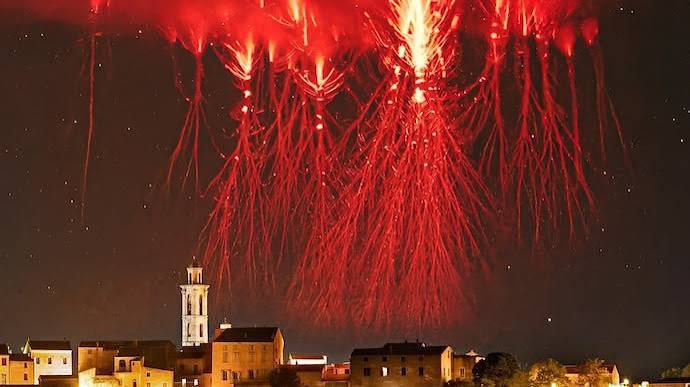
French photographer Florian Riou has successfully captured a striking series of rare red sprites illuminating the night sky above severe thunderstorms off the coast of Spain.
The elusive optical phenomena, often appearing as giant red pillars of light or jellyfish-like tendrils, occur high in the upper atmosphere between 50 and 90 kilometers above thunderclouds. Because these electrical discharges last for only milliseconds and are typically obscured by dense storm clouds, capturing them requires specialized timing and positioning.
Riou managed to photograph the event from Calvi in Corsica. His success was the result of extensive preparation, which involved analyzing active thunderstorm coordinates and calculating exact viewing angles across the Mediterranean before attempting the photograph.
The glowing red appearance is generated when intense lightning discharges from underlying storms excite nitrogen molecules in the mesosphere. The stunning captures have drawn significant attention from both photography enthusiasts and atmospheric scientists studying upper-atmospheric electrical activity.