While scientists have spent decades charting the brain's cells, genes, and neural connections, a crucial component of brain biology has long remained in the dark: lipids. These fatty molecules build the membranes surrounding neurons, form the myelin insulation protecting nerve fibers, and help cells communicate.
Now, a team of researchers at the Ecole Polytechnique Fédérale de Lausanne (EPFL) has created the first detailed 3D map of the brain's lipid structure, revealing a hidden layer of organization.
The Lipid Brain Atlas: Discovering "Lipizones"
Mapping brain lipids has historically been a challenge because traditional imaging techniques cannot easily distinguish individual lipid molecules.
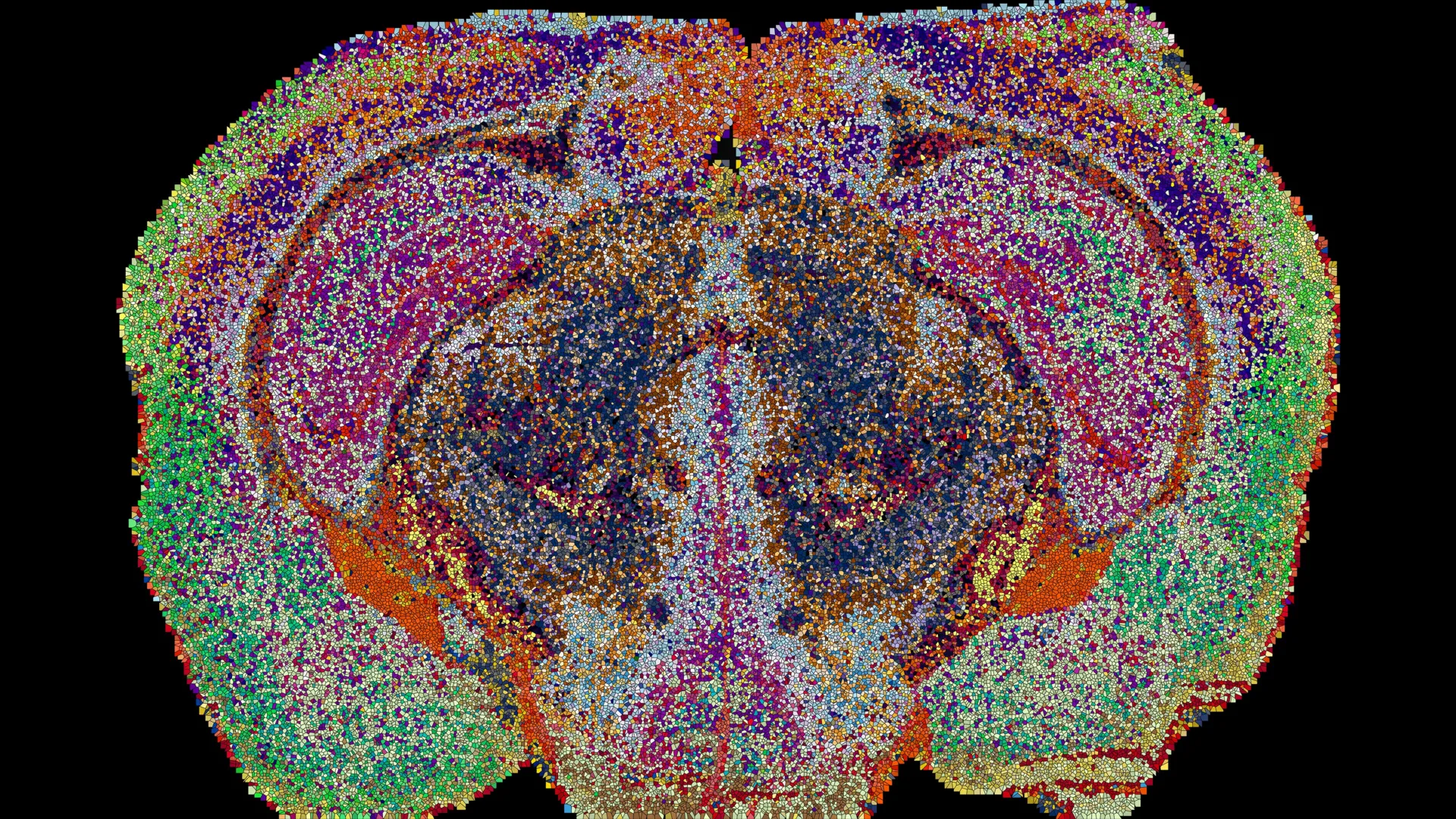
To overcome this, researchers used advanced mass spectrometry imaging. By scanning thin slices of mouse brain tissue, the team gathered roughly 7 million measurements across 172 different lipids. Combining this data with machine learning, they built a comprehensive 3D reconstruction known as the Lipid Brain Atlas, which was published in Nature.
The results revealed 539 chemically distinct territories, which the researchers named "lipizones." Each zone features a unique combination of lipids that acts like a chemical signature.
"In effect, lipids work like postal codes, giving distant but related parts of the brain the same chemical address," explains Giovanni D'Angelo, a professor at EPFL.
Challenging Traditional Brain Maps
The lipid map uncovered unexpected patterns that standard anatomical and genetic maps missed:
- The Complexity of White Matter: Once thought to be a relatively uniform tissue carrying nerve fibers, white matter actually contains a patchwork of distinct lipid zones. Researcher Luca Fusar Bassini notes that this proves the cells responsible for making myelin are far more chemically diverse than their genes suggest.
- New Chemical Boundaries: The mapping also revealed previously unrecognized chemical borders in the choroid plexus (the structure that produces cerebrospinal fluid) and the tissues lining the brain's internal cavities.
How Pregnancy Rewires the Brain's Chemistry
Beyond mapping resting brain structure, the team investigated how these lipid zones change during pregnancy.
When examining pregnant mice, researchers found massive shifts in lipid composition across multiple brain regions—changes that were even more pronounced than typical differences between male and female brains. The outer cortex showed extensive changes, while levels of galactosyl ceramide (a key component of myelin) increased sharply throughout the white matter.
According to Gioele La Manno, these shifts indicate that "the brain constantly adjusts its lipids to meet the body's changing needs," effectively retuning its wiring to handle the demands of pregnancy.
What’s Next for Brain Science?
The Lipid Brain Atlas is now freely available online, providing a detailed reference for healthy brain tissue.
While the specific mouse map cannot be directly translated to humans, the breakthrough methodology gives scientists a powerful new tool. By understanding how healthy brains organize and adapt their lipids, researchers hope to gain fresh insights into aging, development, and neurological conditions like Alzheimer's disease and depression.