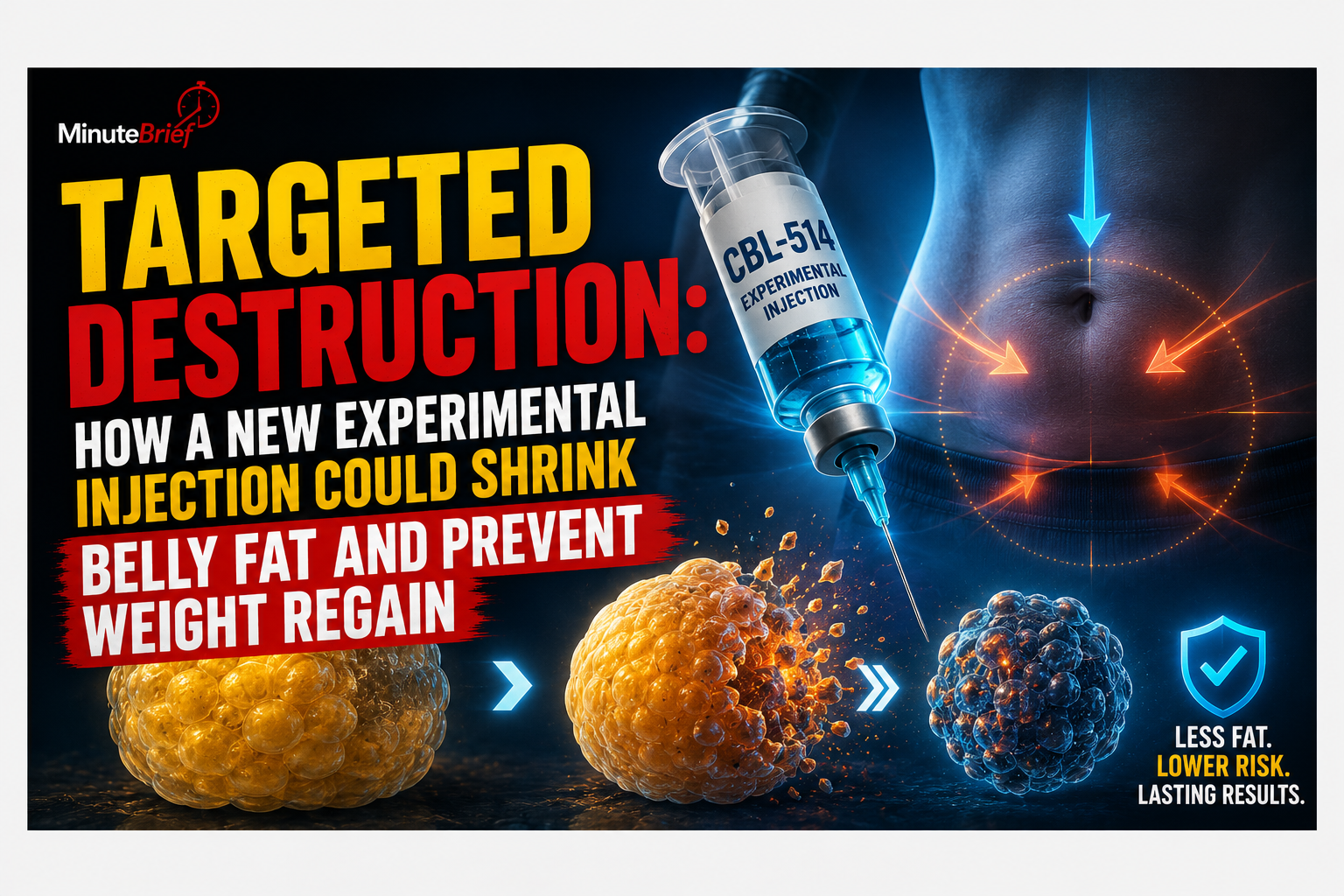
Scientists are developing an experimental treatment that could change how we approach weight loss. A new drug known as CBL-514 works by forcing fat cells to self-destruct rather than just shrinking them.
Highlighted at the annual meeting of the European Association for the Study of Diabetes, early clinical trials show that the injection can significantly reduce both surface-level fat and dangerous deep belly fat.
Key Takeaways from the Research
- Cell Self-Destruction: Instead of just emptying stored fat, CBL-514 triggers a natural biological process called apoptosis, causing targeted fat cells to break down and die.
- Reduces Visceral Fat: Clinical trial data showed that the injection reduced deep visceral abdominal fat—the type surrounding internal organs that strongly contributes to type 2 diabetes and heart disease—by over 10% compared to a placebo.
- Preventing Weight Regain: Animal studies combining CBL-514 with popular weight-loss medications like tirzepatide showed promising signs that eliminating fat cells could help prevent weight rebound after stopping treatment.
- Fewer Side Effects: During phase 2 trials, the drug was generally well-tolerated, with most side effects limited to temporary, mild-to-moderate reactions around the injection site.
How It Works Differently
Traditional cosmetic procedures like liposuction physically remove or reshape subcutaneous fat beneath the skin, while popular GLP-1 medications like Ozempic help patients lose weight systemically. However, maintaining that loss can be difficult once treatment stops.
By physically destroying adipocytes (fat-storing cells), CBL-514 reduces the body's overall capacity to store fat in those areas again.
The Path Forward
While early phase 2 clinical trial results are encouraging, CBL-514 remains an experimental therapy. Larger phase 3 clinical trials are currently underway to confirm its long-term safety, effectiveness, and ability to improve metabolic health in broader human populations.