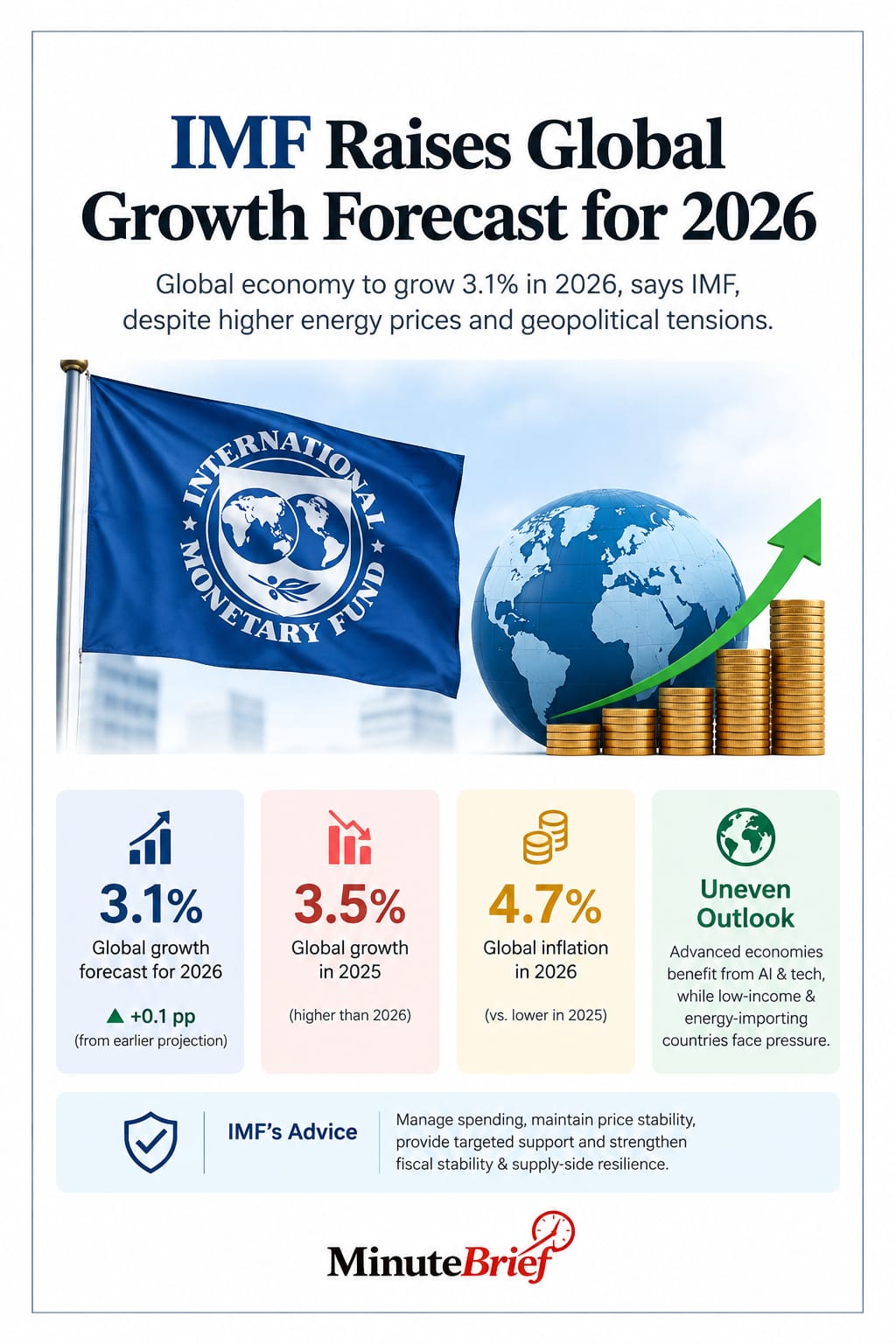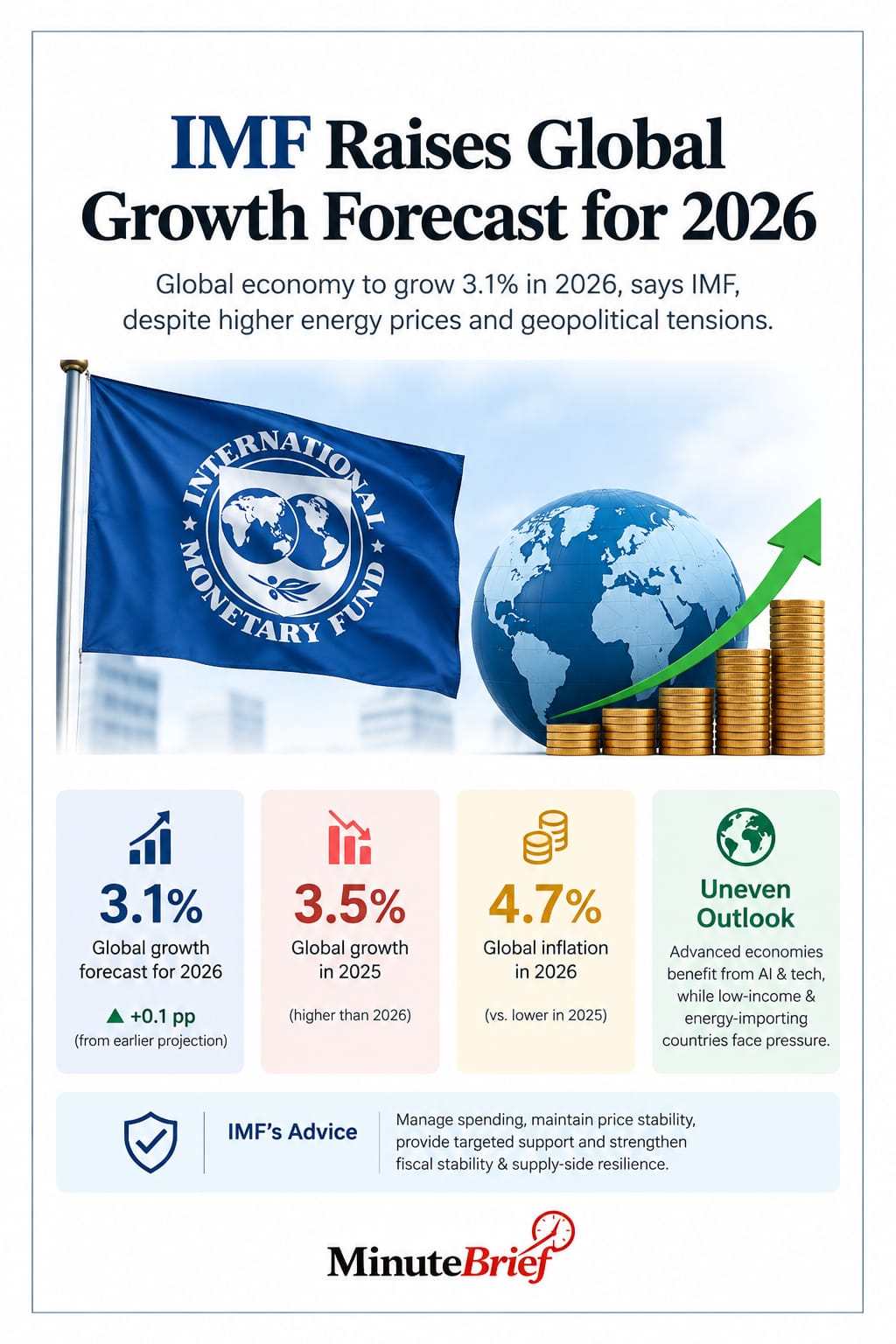
The International Monetary Fund (IMF) has raised its forecast for global economic growth in 2026 to 3.1%, an increase of 0.1 percentage points from its earlier projection, reflecting the resilience of major economies despite rising energy prices and geopolitical tensions.
However, the global economy is expected to grow more slowly than the 3.5% recorded in 2025, highlighting the continuing challenges facing the world economy.
The IMF’s latest World Economic Outlook, released in October 2026, also projects global inflation to accelerate to 4.7% in 2026, driven partly by higher energy costs associated with the Iran war. The IMF has warned that the global economy is experiencing a divided outlook, with advanced economies benefiting from strong investment in artificial intelligence (AI) and technology, while low-income and energy-importing countries face mounting economic pressure.
Rising fuel prices, inflationary pressures, increasing public debt and persistent geopolitical uncertainty are creating difficulties for vulnerable economies. The Fund cautioned that prolonged disruptions to energy production and transportation could further increase inflation and weaken economic growth.
Although the global economy has demonstrated resilience, the IMF warned that the risks remain tilted to the downside. It urged governments to manage public spending and borrowing carefully, maintain price stability and provide temporary, targeted assistance to households affected by higher energy and living costs. The IMF also emphasised the importance of strengthening fiscal stability and supply-side resilience to prepare for future economic shocks.