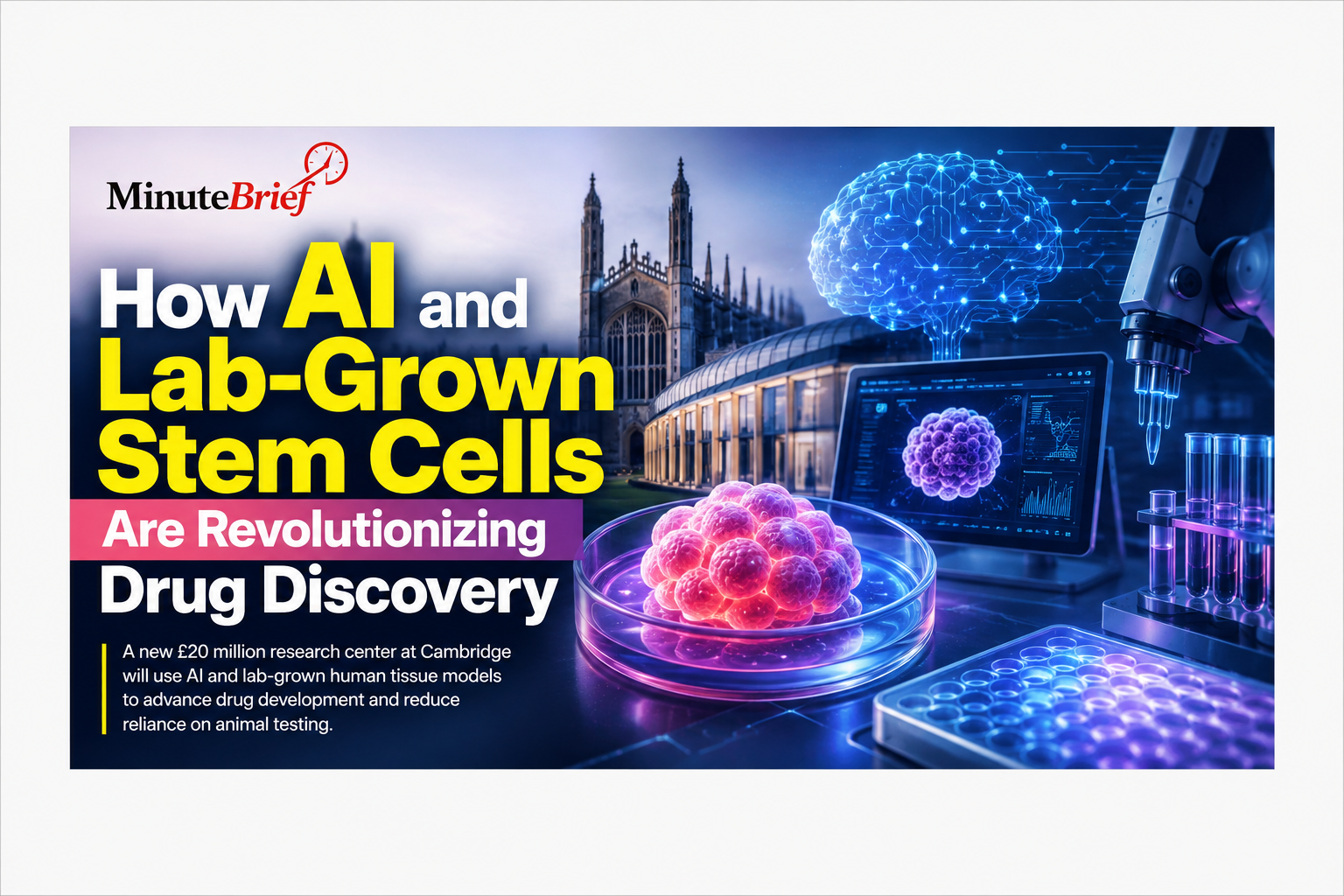
A new £20 million research center is coming to Cambridge to accelerate medicine development using artificial intelligence and lab-grown human tissue models.
Key Details of the Hub
- Location: Based at the Cambridge Stem Cell Institute within the Cambridge Biomedical Campus.
- Funding & Partners: Funded by the Medical Research Council, the initiative is a collaboration between Cambridge University Hospitals NHS Foundation Trust (CUH), the Wellcome Sanger Institute, the MRC Laboratory of Molecular Biology, and Royal Papworth Hospital.
- Leadership: Co-led by Professors Bertie Göttgens (Director of the Cambridge Stem Cell Institute) and Matthias Zilbauer (Honorary Consultant at CUH).
How It Works
The hub will combine AI algorithms, bioengineering, and stem cell technology—specifically lab-grown mini-organs called "organoids"—to model human diseases more accurately.
- Personalized Treatments: By capturing unique patient traits in tissue models, researchers can test candidate drugs before clinical trials.
- Faster Development: The approach aims to reduce both the time and cost associated with traditional drug discovery.
- Reducing Animal Testing: Using human-derived tissue models will help minimize reliance on animal research models.
Source: BBC