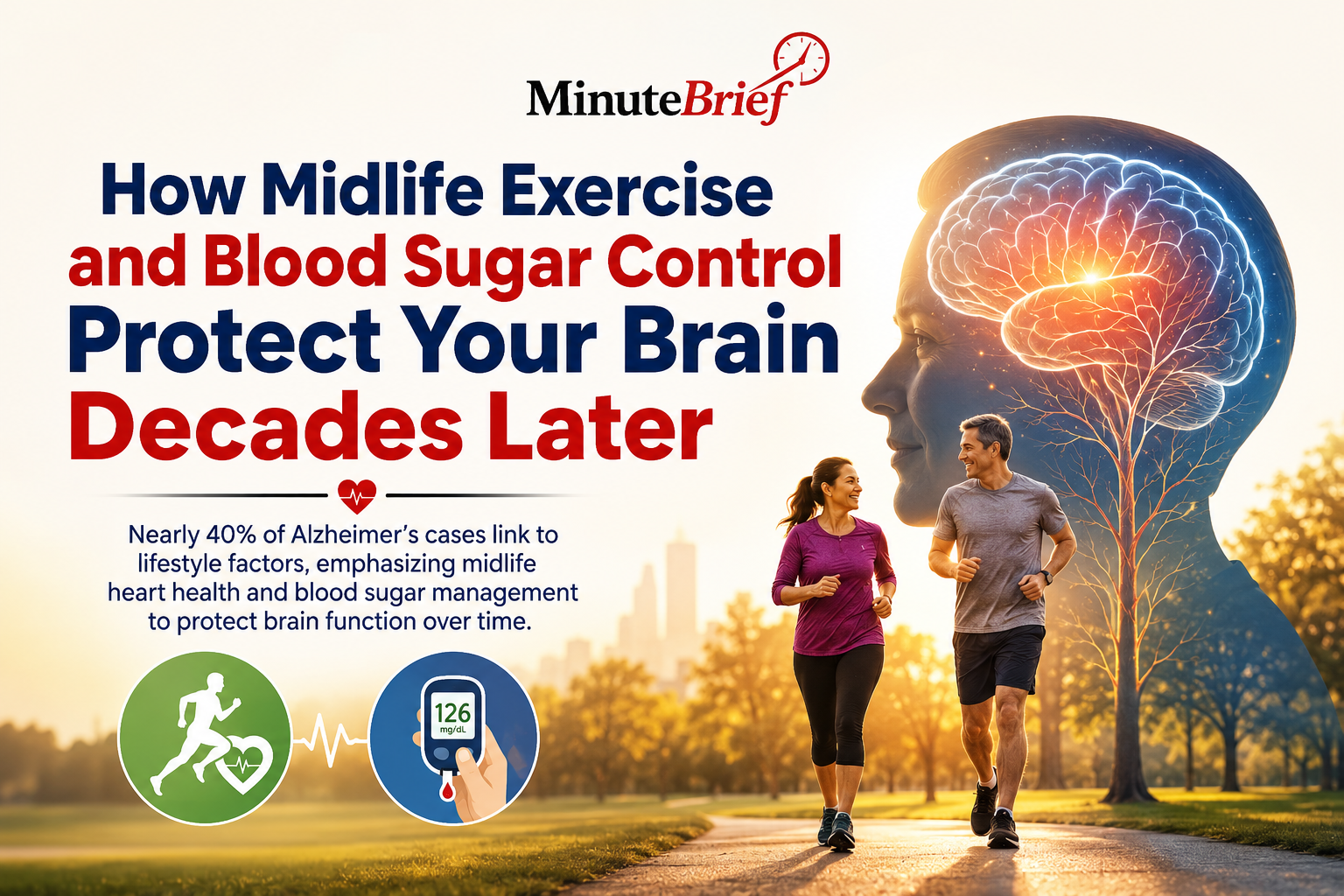
A new study from UT Health San Antonio suggests that taking care of your heart during midlife pays significant dividends for your brain as you age, helping slow cognitive decline decades later.
Key Research Findings
- Population-Specific Benefits: Physical activity was strongly linked to a slower rate of cognitive decline among Mexican American participants, while lower fasting blood glucose levels (126 mg/dL or lower) were particularly protective for non-Hispanic white participants.
- Modifiable Risk Factors: Cardiovascular health—measured using metrics like physical activity, diet, and blood sugar—plays a major role in brain aging. Scientists estimate nearly 40% of Alzheimer's cases are connected to modifiable lifestyle factors.
- Underrepresented Groups: Hispanic older adults face higher rates of Alzheimer's (14% compared to 10% in non-Hispanic white adults), making ethnic-focused cognitive research critical for targeted prevention strategies.
Why This Matters
By addressing cardiovascular habits and managing blood sugar in middle age, individuals can meaningfully lower their long-term risk of Alzheimer's and other dementias—proving that small, healthy lifestyle changes today offer long-lasting protection for the brain.
Source: Science Daily