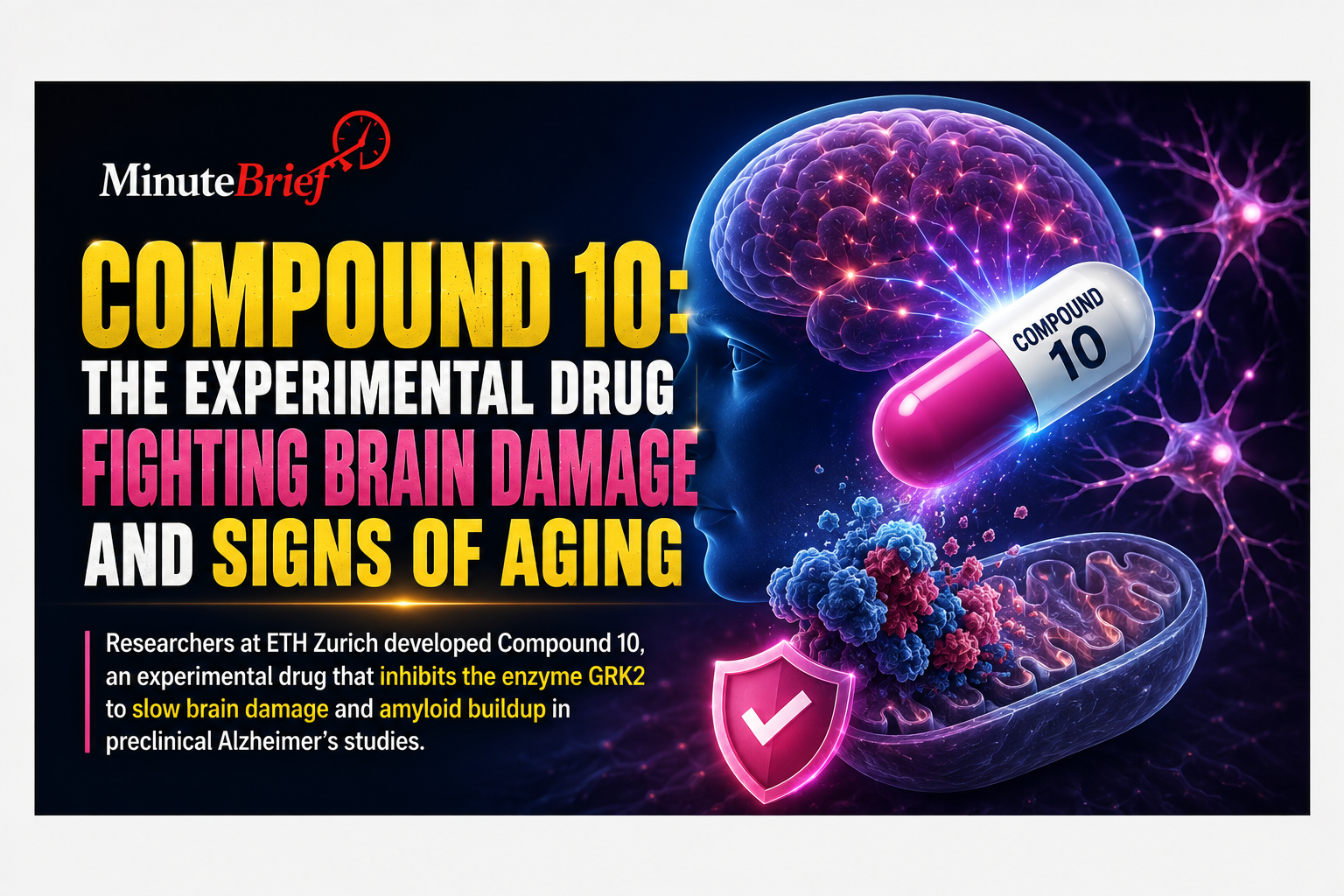
Researchers at ETH Zurich have identified a new culprit behind Alzheimer's disease—an enzyme called GRK2—and developed a treatment that blocks its toxic effects. In preclinical trials, their experimental drug, known as Compound 10, successfully slowed brain damage, extended nerve cell survival, and reduced amyloid buildup.
Key Highlights & Discoveries
- Mitochondrial Blockage: When GRK2 becomes inactive through cellular metabolism, it forms aggregates that clump onto mitochondria (the cell's powerplants). This starves brain cells of energy and triggers severe cellular stress.
- Vicious Cycle Broken: Toxic amyloid beta fragments create further stress, causing more GRK2 to clump. Compound 10 stops these aggregates from forming, breaking the self-reinforcing cycle.
- Anti-Aging Side Benefits: Beyond protecting brain cells, the treatment unexpectedly improved heart function and slowed physical signs of aging in mice, including reducing gray hair growth.
- Complementary Therapy Potential: Because Compound 10 acts on a completely different biological pathway than current Alzheimer's medications, it could eventually be paired with existing drugs to enhance overall treatment effectiveness.
Source: Science Daily