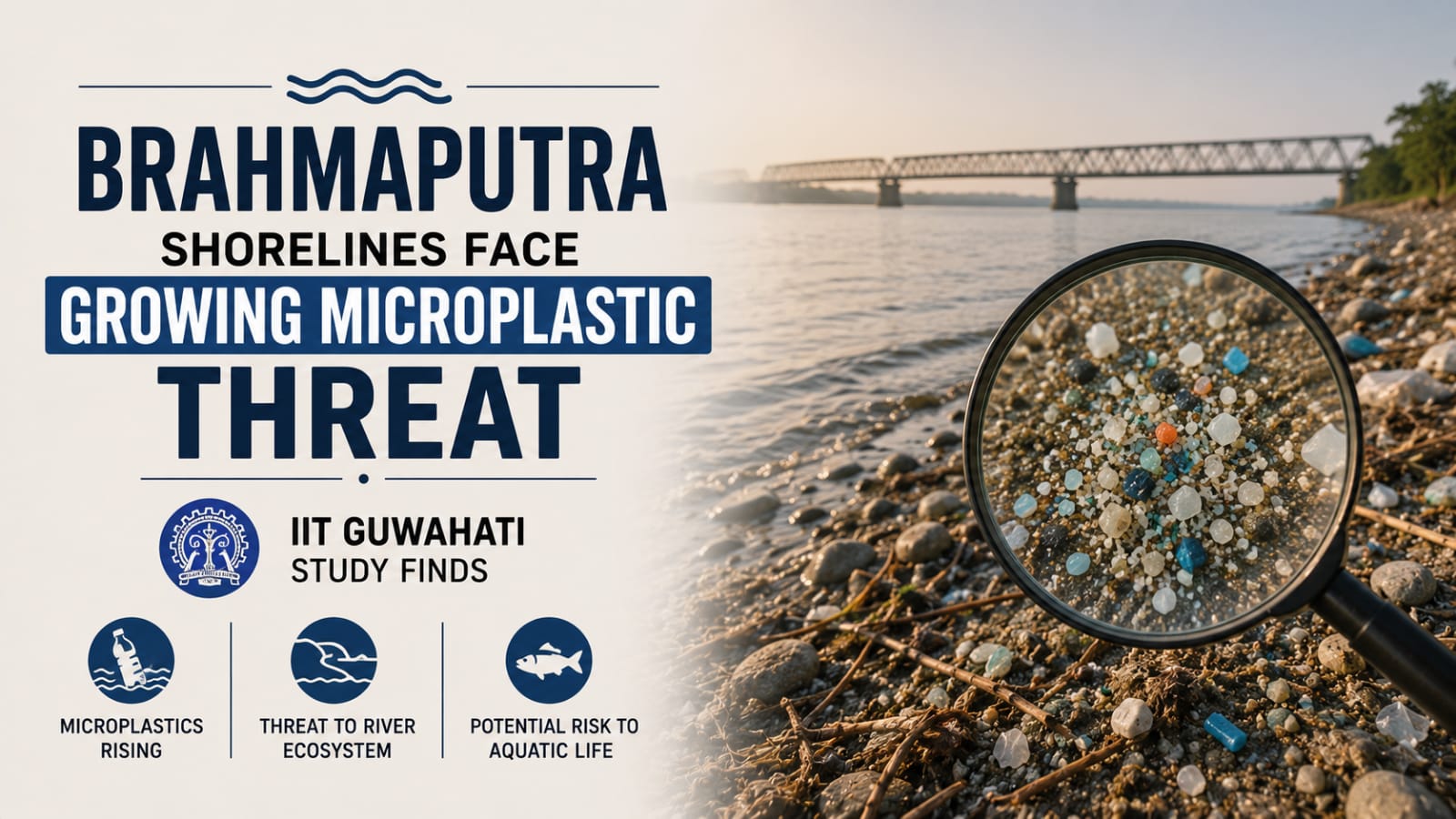
A study commissioned under the North Eastern Development Finance Corporation Ltd (NEDFi)’s Techno Economic Development Fund (TEDF) has highlighted the growing threat of microplastic pollution along the shorelines of the Brahmaputra and called for practical, field-based remediation measures.
The report, titled ‘Survey and Studies on Remediation of Microplastic on Shorelines of Brahmaputra River’, was released during OCTAVATE 2026, organised by the NEST Cluster of IIT Guwahati from August 10 to 12 at the IIT Guwahati campus.
Led by Prof Vimal Katiyar and his team at IIT Guwahati, the study examined microplastic contamination at more than 20 sites covering residential, rural, industrial, treatment plant and airport-influenced areas. Researchers used techniques including FTIR spectroscopy and microscopy to identify and characterise different types of microplastics.
The study found that plastics such as polyethylene, polypropylene and polyvinyl chloride are contributing to shoreline contamination, with urban runoff, industrial effluents and hydrological processes identified among the factors driving the problem.
Researchers also assessed possible remediation methods, including floating barriers and biofilm-assisted degradation, for their suitability under field conditions. The findings aim to support stronger environmental protection, safeguard biodiversity and promote a more plastic-resilient Brahmaputra ecosystem.