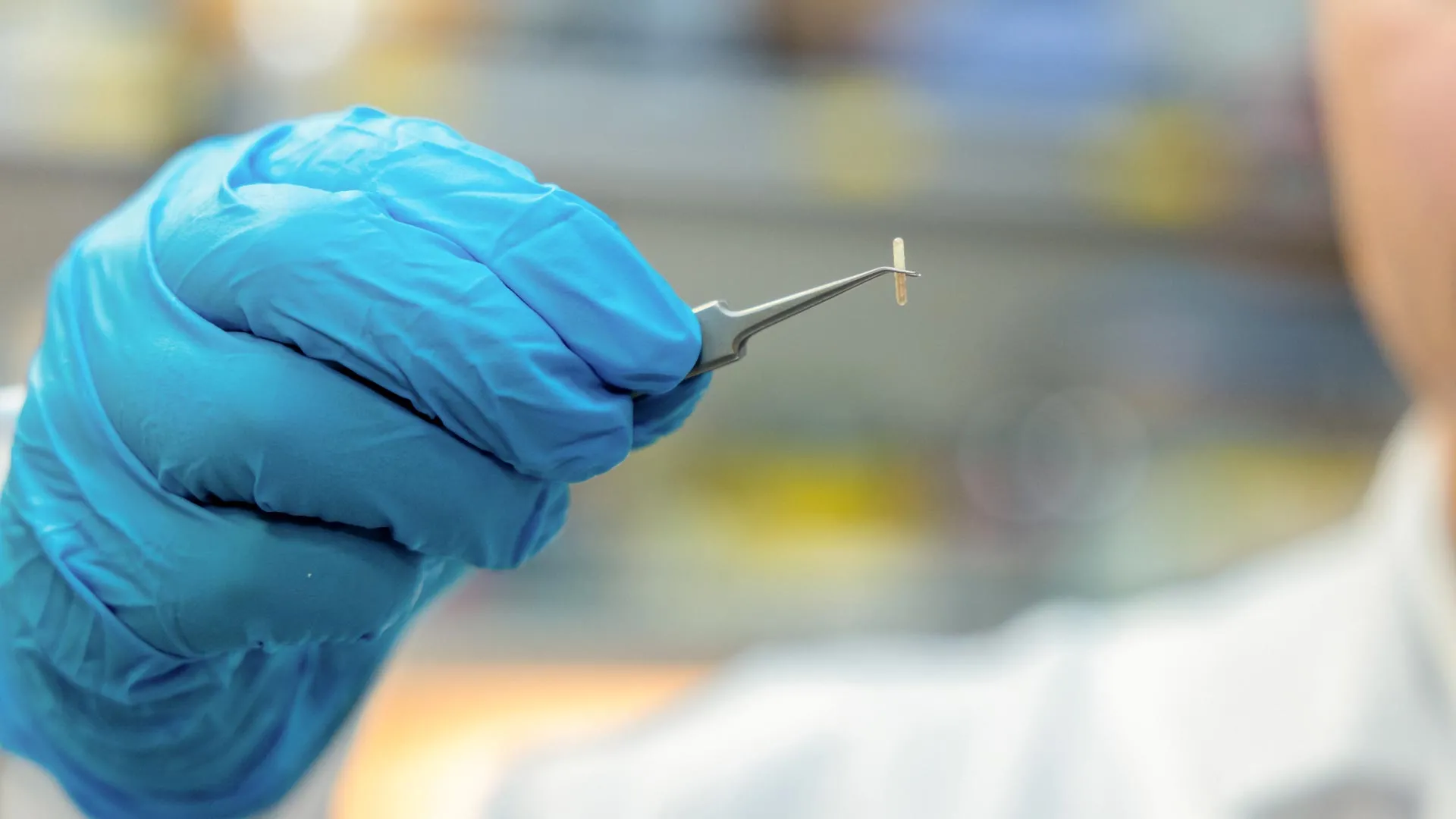
A multidisciplinary team of scientists at New York University (NYU Abu Dhabi and NYU Tandon) in partnership with Cleveland Clinic Abu Dhabi has developed a revolutionary medical device that could completely change how doctors treat chronic pain and movement disorders.
Published in Science Advances, the research introduces a miniature, seed-sized implant that regulates nerve activity without the need for surgical implantation, internal batteries, or connecting wires.
Key Takeaways from the Research
- Needle-Deliverable Size: Roughly the size of a small seed, the device is small enough to be injected directly through a standard medical needle close to a target nerve.
- Completely Wireless Power: The implant receives power wirelessly from outside the body, allowing healthcare providers or patients to adjust stimulation levels in real time.
- Programmable Precision: It delivers customizable electrical signals to block unwanted or abnormal nerve activity, giving clinicians high flexibility tailored to individual treatment needs.
- Imaging Friendly: Doctors can accurately track, place, and verify the implant's position using familiar medical imaging techniques like ultrasound and computed tomography (CT) scans.
Bridging the Gap in Pain Management
Traditional neuromodulation therapies often require invasive surgical procedures to implant bulky generators and wires, carrying risks of prolonged recovery times and procedural complications. By contrast, this new technology aims to bridge the gap between non-invasive options and surgical implants.
In early laboratory and preclinical in vivo testing, the device successfully activated nerves while maintaining stable, consistent performance under simulated real-world conditions.
The Path Forward
While these early results are highly encouraging, researchers note that the device's efficacy and safety in human patients have not yet been fully established. If future clinical trials confirm its performance, this technology could drastically minimize surgical risks, shorten recovery times, and expand access to advanced nerve stimulation therapies for thousands of patients.