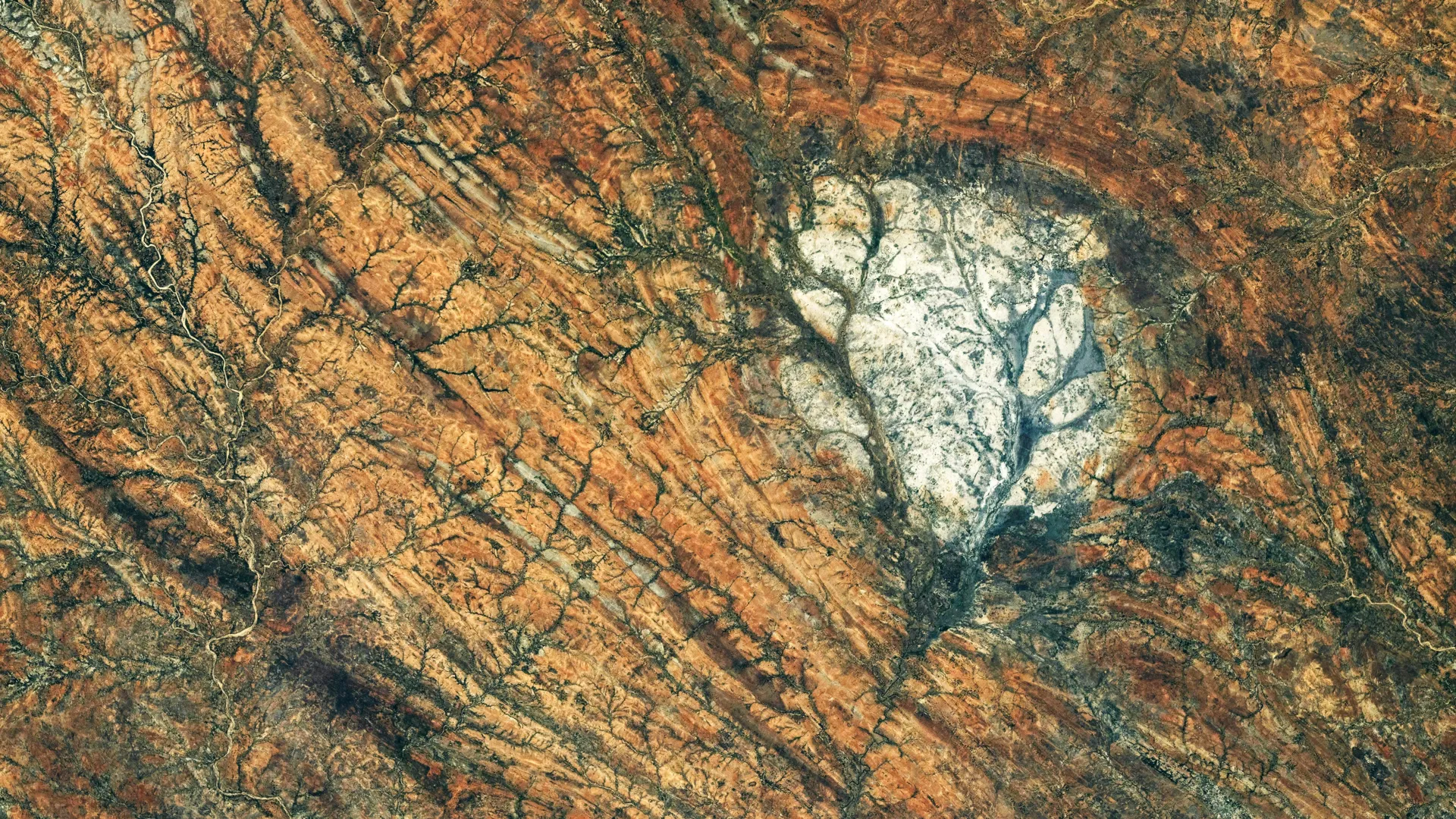
An astronaut aboard the International Space Station recently captured a striking photograph of southern Madagascar, revealing a geological feature that looks as though it belongs on the Moon.
The image highlights a bright, roughly circular patch of rock contrasting sharply against the rust-colored landscape. This formation is made of anorthosite, the same material that covers the Moon's bright highlands.
Key Takeaways from the Discovery
- Moon-Like Composition: The formation consists of anorthosite, an intrusive igneous rock that forms much of the Moon's reflective outer crust.
- Ancient Origins: Geological estimates suggest the Saririaky anorthosite massif dates back at least 600 million years to the late Precambrian period.
- Tectonic Forces: The surrounding terrain bears the scars of immense heat and pressure caused by ancient continental collisions that helped form the supercontinent Gondwana.
- Window into Lunar History: Because lunar rock samples brought back by Apollo missions are limited, studying terrestrial anorthosite helps scientists better understand how planetary crusts form and evolve.
Connecting Earth and Space
Anorthosite forms when molten material cools and solidifies deep beneath the surface, allowing large mineral crystals to grow over time. While most famous for defining the Moon's bright highlands, large deposits of anorthosite also exist in several locations on Earth, including eastern Canada, Scandinavia, and southern India.
In Madagascar, tectonic forces stretching over hundreds of millions of years have deformed and isolated these ancient rock bodies. By examining these formations locally, researchers gain valuable insights into both Earth's dynamic crustal history and the ancient geological processes of our nearest celestial neighbor.