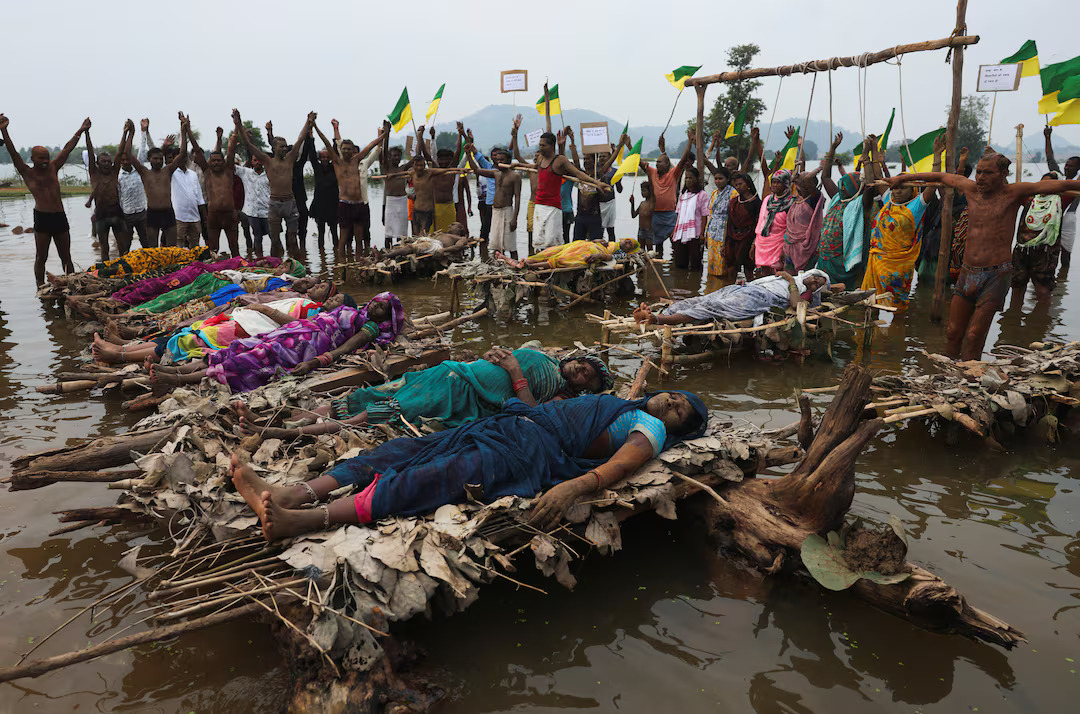
Tribal residents and villagers in central India are staging fierce protests—standing knee-deep in water and lying on mock funeral pyres—against India's massive $87 billion river-linking initiative.
Championed by Prime Minister Narendra Modi, the decades-in-the-making project aims to redistribute water from "surplus" rivers to drought-prone regions, boosting food security and aiding millions of farmers. However, early work on the first phase has begun flooding homes, lands, and temples, triggering intense pushback over displacement and environmental damage.
Key Concerns and Grievances
- Inadequate Compensation: While the government has increased compensation to at least 1.25 million Indian rupees ($13,000) per hectare for affected residents along the Ken River in the Panna district, many villagers say the payments are insufficient to rebuild their lives or replace lost livelihoods.
- Submerged Heritage: Local residents report that community staples, such as village temples that served as vital sources of income and religious life, have been entirely submerged.
- Environmental Backlash: Environmentalists warn that building the 2-kilometer-long Daudhan Dam will inundate approximately 9,000 hectares (22,200 acres) of land, heavily impacting the Panna Tiger Reserve, a celebrated tiger conservation area.
- Scientific Skepticism: Critics also question the project's foundational hydrological assumption—that water is genuinely surplus in the Ken basin and deficient in the Betwa basin—arguing its scientific feasibility remains unproven.
While local administrators report that compensation has already been disbursed to over 90% of those affected, defiant protesters maintain they would rather face rising waters than leave their ancestral lands without fair and adequate support.