In Brief
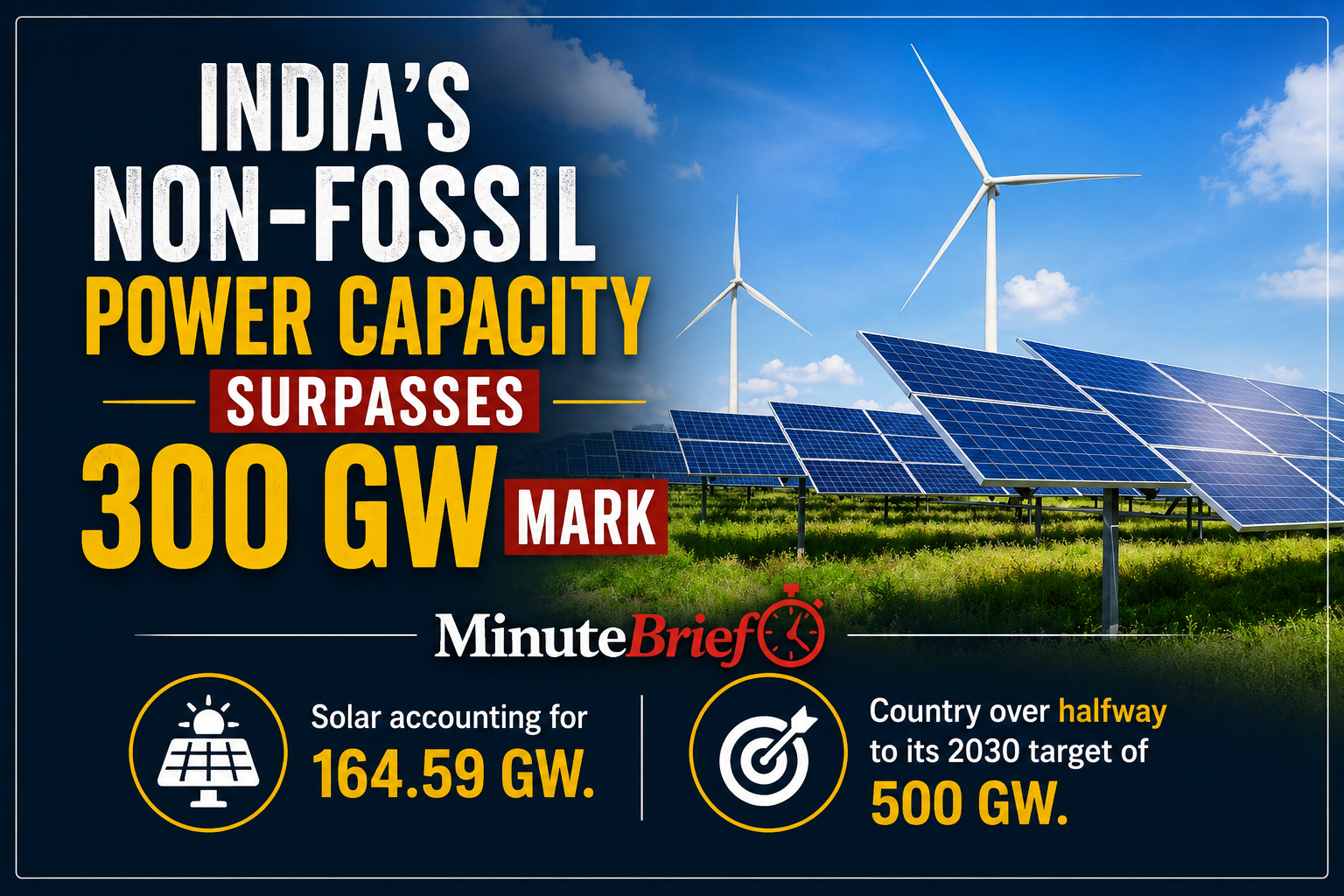
- India’s non-fossil power capacity surpasses 300 GW milestone.
- This marks over 60% progress toward the 2030 renewable energy target.
- Solar capacity contributes 164.59 GW to the total.
- Achievement underscores India's commitment to clean energy expansion.
India has crossed a significant milestone by reaching over 300 gigawatts (GW) of installed non-fossil fuel power capacity. This marks a major step towards the country's goal of installing 500 GW of clean energy capacity by 2030.
Solar energy leads the non-fossil capacity with 164.59 GW, highlighting the rapid growth in this sector. Other sources, including wind, hydro, and nuclear, contribute to the overall capacity, reflecting a diversified approach to clean energy.
This achievement means India has completed more than 60% of its 2030 target, reinforcing its commitment to sustainable development and reducing carbon emissions. Government initiatives and policy support have played a crucial role in accelerating installation and adoption.
Continued progress in renewable energy capacity is expected to support India's climate goals and energy security in the coming decade.