In Brief
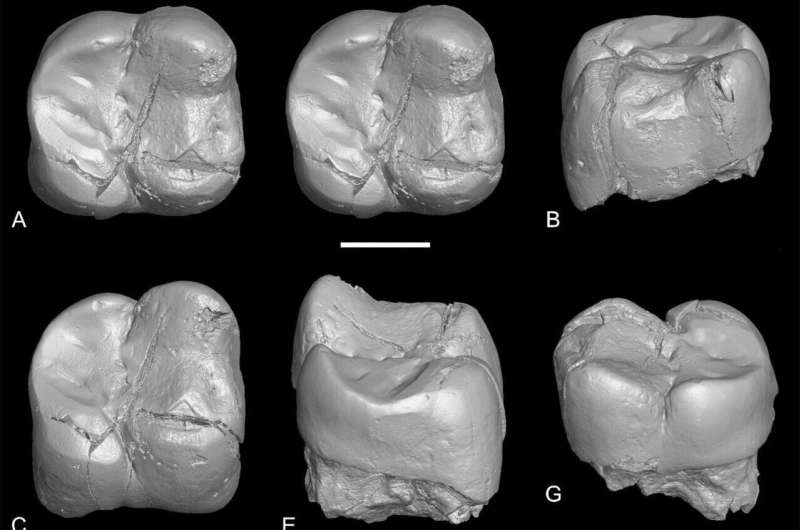
- Researchers identified the new species, named Yakamys sirindhornae, from a fossilized lower molar and incisor uncovered in late Eocene sediment layers in Krabi, Thailand.
- Living 33 to 35 million years ago, the animal weighed roughly 30 kilograms (66 pounds)—about half the size of a modern capybara—making it one of the largest known Paleogene rodents.
- The discovery reveals that rodents evolved large body sizes 15 to 20 million years earlier than paleontologists previously understood.
- The species name pays tribute to Thailand's Princess Maha Chakri Sirindhorn for her support of scientific and paleontological research.
Fossil Teeth Reveal Ancient Mammalian Giant
A team of international paleontologists and Thai researchers has officially described a previously unknown species of giant rodent that inhabited Southeast Asia tens of millions of years ago. Published in the scientific journal Scientific Reports, the study details Yakamys sirindhornae, a species identified from two fossilized teeth originally recovered from the Bang Mark coal basin in Krabi province.
Analysis of the fossilized molar and incisor indicates that the animal roamed the late Eocene environment between 33 and 35 million years ago. Weighing an estimated 30 kilograms (66 pounds), the creature ranks among the largest rodents ever recorded from the Paleogene period.
Rewriting the Timeline of Rodent Gigantism
The identification of Yakamys sirindhornae provides crucial scientific evidence that gigantism in rodents began far earlier than documented in existing fossil records. Previously, dramatic body size expansion in rodents was primarily associated with much later South American species.
The newly described species belongs to the extinct Ischyromyidae family, one of the earliest major branches of the rodent evolutionary tree. Researchers note that its presence in ancient Thailand suggests early rodents may have originated and diversified in Southeast Asia before dispersing globally.
Scientific Recognition and Ongoing Questions
The generic name Yakamys combines the Thai word yak (meaning giant) with the Greek mys (mouse or rat), while the species epithet honors Thailand's Her Royal Highness Princess Maha Chakri Sirindhorn for her ongoing advocacy of paleontological studies.
Despite the breakthrough, significant mysteries remain. Because the identification relies on just two teeth, researchers note that the exact physical appearance, diet, and behavior of Yakamys sirindhornae cannot yet be conclusively reconstructed.
Next Steps
Paleontologists are expanding field excavations within the late Eocene strata of the Krabi Basin in hopes of recovering additional skeletal remains, which could reveal details about the ancient mammal's locomotion, diet, and exact ecological niche.