In Brief
- The newly established commission evaluated data from over 200 countries to outline major health and survival hazards over the next 75 years.
- Beyond immediate casualties, the study highlighted that a large-scale nuclear war could trigger severe climate disruption and widespread nuclear famine.
- The report cautioned that dangerous applications of AI—such as accelerating the development of biological weapons or orchestrating critical infrastructure attacks—pose severe long-term hazards.
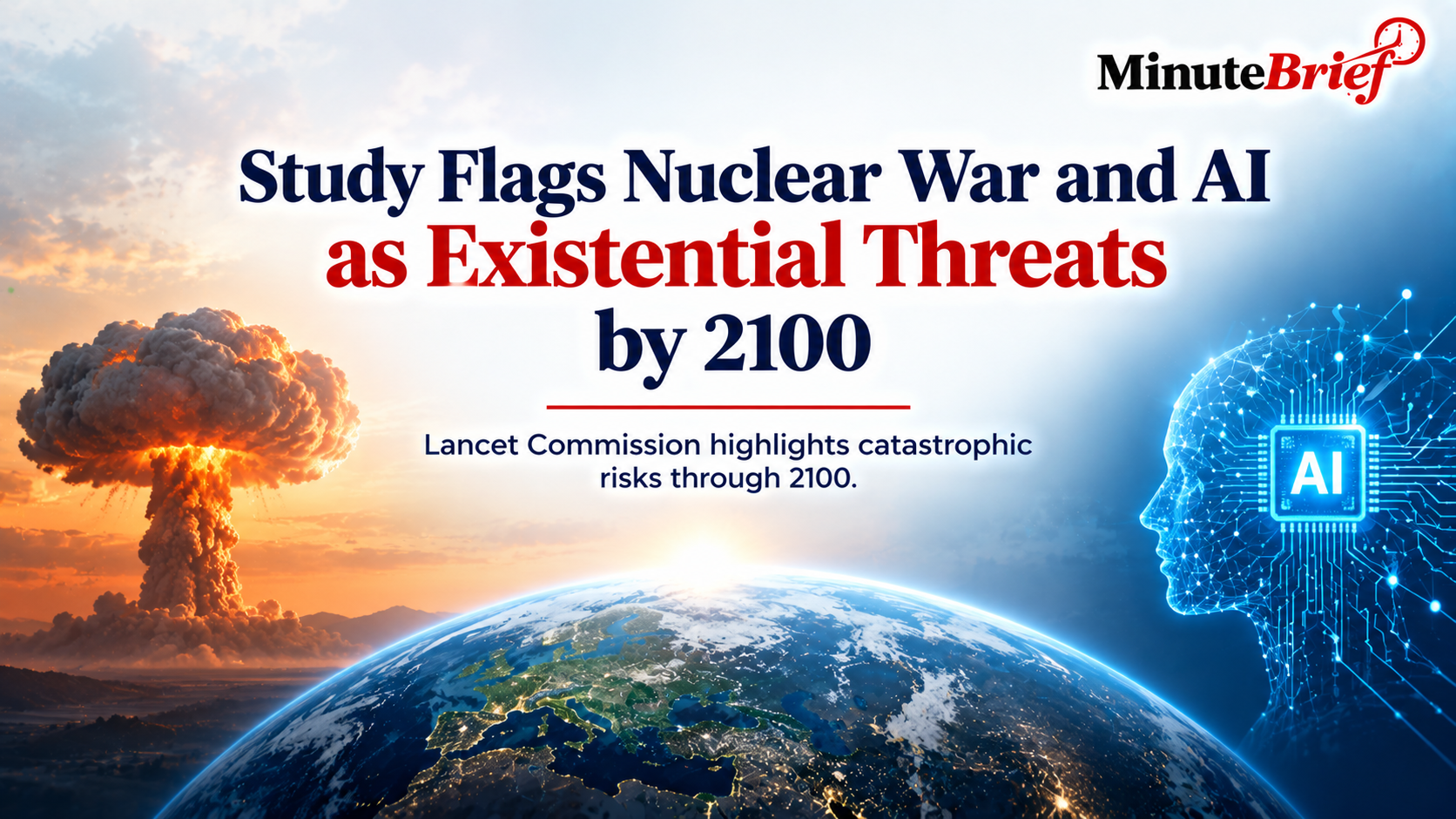
A prominent global assessment published in The Lancet has cataloged 17 critical health and security risks that could profoundly destabilize human civilization over the next 75 years. Among the wide-ranging hazards evaluated by international experts, nuclear warfare and the malicious deployment of advanced artificial intelligence emerged as the most severe existential threats.
Compiled by researchers utilizing cross-sector data from more than 200 countries, the assessment emphasizes that while the probability of outright human extinction remains low, the potential impact of such catastrophic events warrants immediate preventative governance. The study notes that a nuclear conflict would extend far beyond initial targets, releasing massive amounts of atmospheric soot capable of halting global crop production and triggering worldwide famine.
Simultaneously, the report warns that the unmonitored or deliberate misuse of AI systems by malicious actors could introduce unprecedented dangers, including the automated design of biological agents and coordinated large-scale disruptions to critical infrastructure. Other highlighted concerns include intensifying climate crises, pandemics, and sharp cuts in international aid.
The commission stresses that these forecasts are intended as proactive warnings rather than fatalistic predictions, urging global leaders to bolster institutional defenses and prioritize risk mitigation before systemic vulnerabilities materialize into irreversible crises.