In Brief
- Myspace is trying to make a comeback as social media fatigue grows.
- Analysts say nostalgia for less algorithm-driven platforms drives excitement for Myspace's relaunch.
- The platform presents itself as an antidote to dominant social media algorithms.
- Despite the appeal, Myspace’s resurgence faces challenges competing with established social networks.
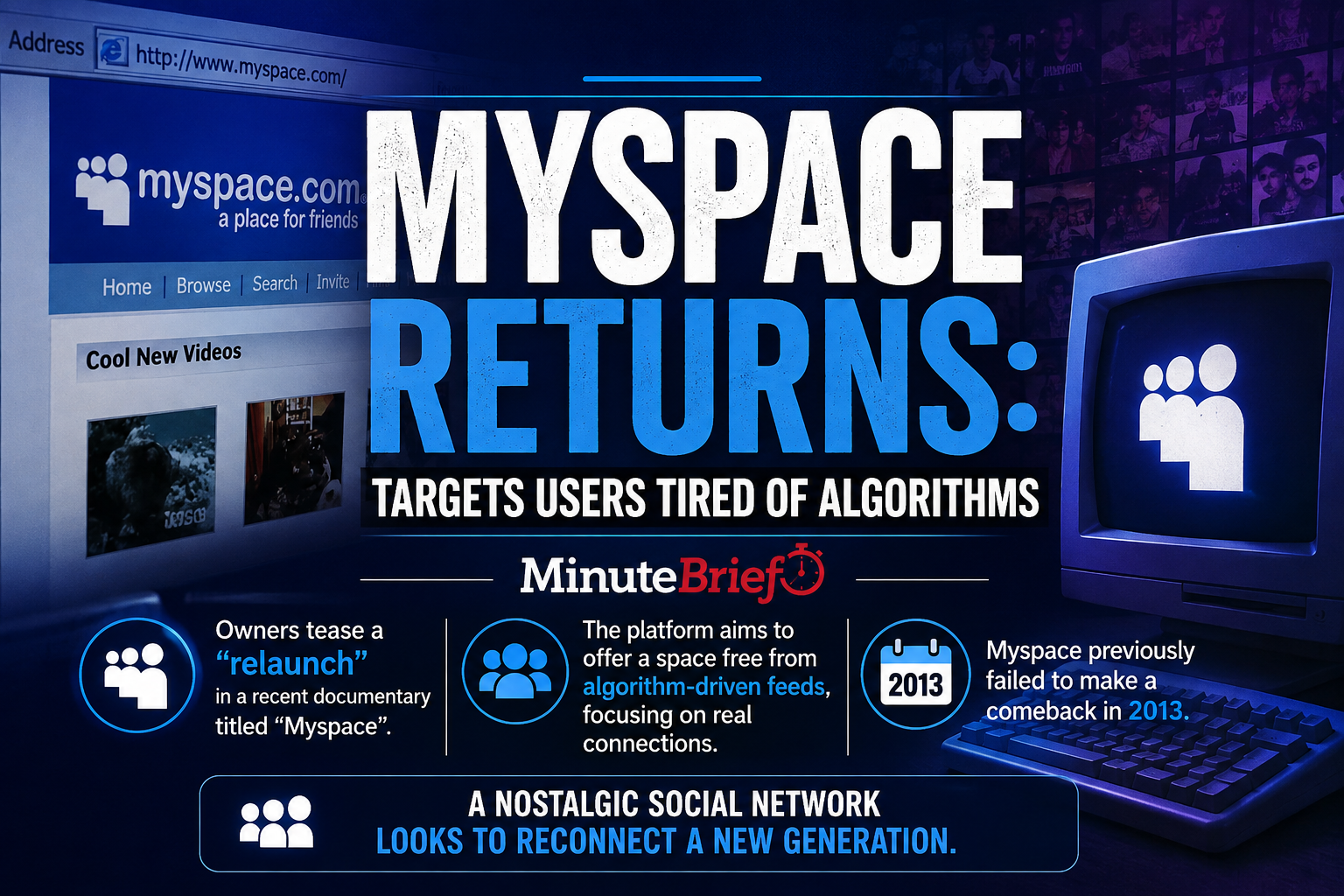
Myspace is positioning itself for a revival as users express fatigue with dominant social media platforms. The company aims to capitalize on nostalgia and provide an alternative free from overpowering algorithms that shape content today.
According to experts, the excitement surrounding Myspace’s relaunch reflects a yearning for earlier, more analog internet experiences. Its owners, Tim and Chris Vanderhook, co-founders of Viant Technology, recently appeared in a documentary, “Myspace,” directed by Tommy Avalone, where they teased another “relaunch” after a previous failed attempt in 2013.This sentiment is seen as a reaction to the pervasive influence of algorithmic feeds on current social media.
Once the most popular social media website in the world, with 115 million visitors per month in 2008, it was quickly overtaken by Facebook. Myspace markets itself as an "antidote" to algorithm-driven content curation, hoping to attract users seeking more authentic connections online. However, industry observers highlight that reclaiming a significant user base will be a considerable challenge given the dominance of existing platforms.
The roadmap ahead for Myspace involves repositioning itself in a crowded market to rekindle interest and adapt to evolving user expectations amid social media fatigue.