In Brief
- India's government spending on education is below Unesco's recommended 15% standard.
- Education funding is consistent with GDP norms but underperforms in achieving public spending targets.
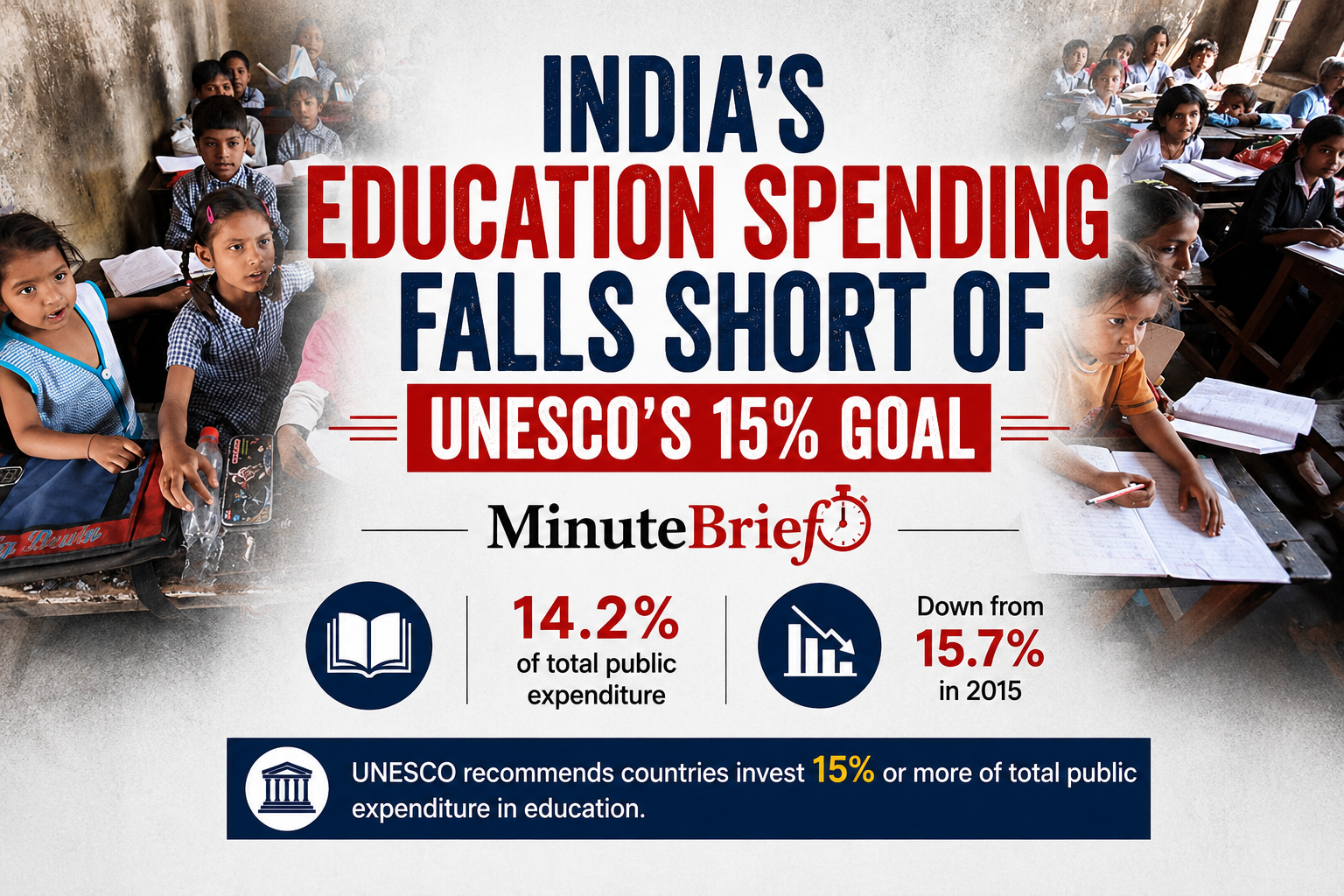
- 14.2% of total public expenditure, down from 15.7% in 2015.
- Despite challenges, India runs extensive education programs reaching millions of students.
India's government expenditure on education remains below the 15% level recommended by the United Nations Educational, Scientific and Cultural Organization (Unesco). While spending patterns conform with the country's GDP standards, the proportion of public funding dedicated to education does not meet Unesco's guidelines. Education accounts for 4.1% of GDP but 14.2% of total public expenditure, down from 15.7% in 2015.
Secondary school completion rates in India continue to lag behind both national objectives and international benchmarks set by Unesco. This gap highlights ongoing challenges in the education sector despite increased financial allocations and program implementation.
The government has launched multiple extensive initiatives aimed at improving access and quality in education, benefiting millions of students across the country. However, these programs have not yet fully translated into the desired improvements in education outcomes.
The observed funding pattern mirrors a global trend where countries are reassessing and shifting focus away from strict education financial targets. India’s case underscores the persistent struggle to balance financial commitments with the effective delivery of educational services.