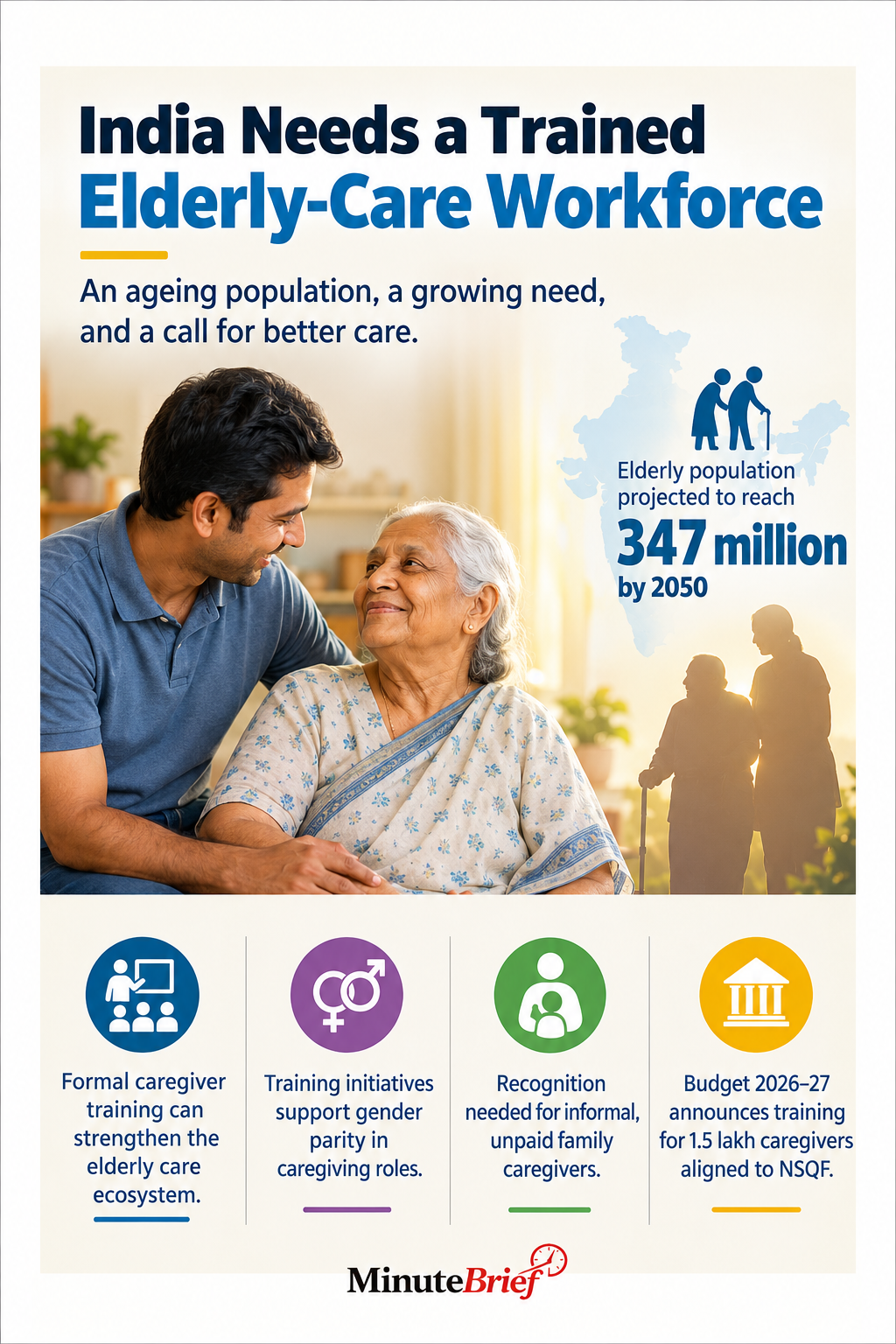
India faces a growing need to train a workforce for elderly care as its population ages. By 2050, the number of people aged 60 and above is projected to reach 347 million, underscoring the importance of a structured caregiving system. Currently, much of elderly care is provided informally by family members who learn to manage medicines, monitor health, assist with mobility, and respond to emergencies without formal training.
The Union Budget 2026–27 addresses this by announcing training for 1.5 lakh caregivers under the National Skills Qualifications Framework (NSQF). Formal training can improve caregiving skills, enhance support quality, and strengthen the elderly-care ecosystem. Expanding such programs beyond small-scale initiatives could create a more organized approach nationwide. Gender parity and recognition for unpaid caregivers are crucial.
Caregiving duties often fall disproportionately on women, many providing ongoing support without pay or formal acknowledgement. Training and institutional support can professionalize caregiving, increase paid care opportunities, and value family caregivers’ contributions.
As India’s elderly population grows, developing comprehensive training and support frameworks for both formal and informal caregivers will be essential to build an inclusive and reliable elderly care system.