In Brief:
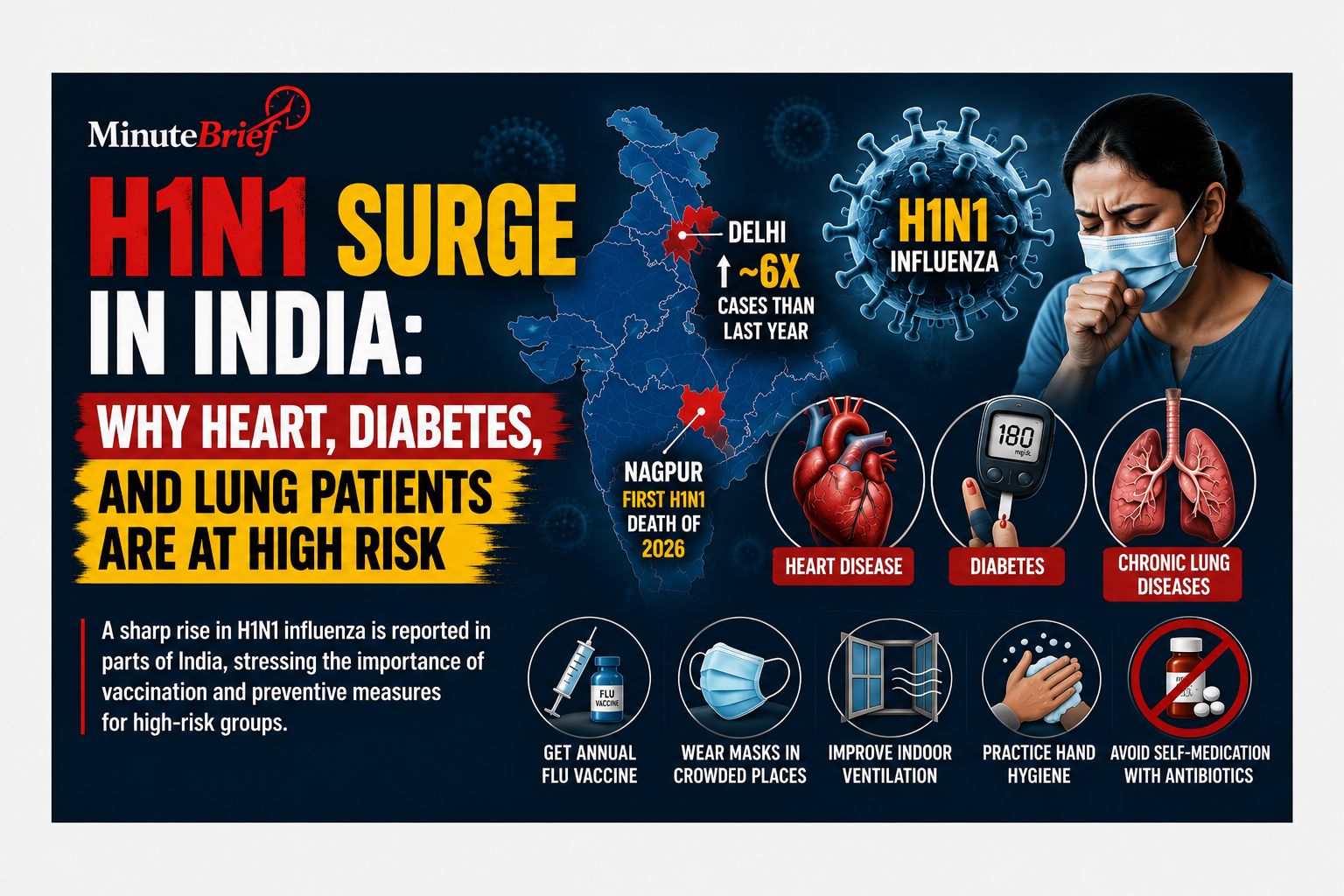
- H1N1 is rising sharply in India (Delhi cases up ~6x; first 2026 death in Nagpur).
- Severe for those with heart disease, diabetes, asthma, or COPD.
- Increases risks of heart attack, blood sugar spikes, pneumonia, and bacterial infections.
- High-risk patients need prompt evaluation; antivirals are most effective within 48 hours.
- Get vaccinated, wear masks in crowded places, ensure adequate ventilation, wash hands, and avoid unnecessary antibiotic use.
A sharp rise in H1N1 influenza cases in parts of India—notably Delhi, where cases reached nearly six times higher than the previous year, and Nagpur, which recorded its first H1N1 death of 2026.
While H1N1 is now a standard seasonal flu virus, medical experts warn that it poses severe risks for individuals with underlying health conditions, including heart disease, diabetes, and chronic lung diseases like asthma or COPD. The infection places extra physiological stress on the body, increasing the risk of heart attacks, blood sugar volatility, asthma flare-ups, viral pneumonia, and secondary bacterial infections. High-risk individuals are advised not to treat symptoms as a routine viral fever and to seek medical evaluation early, as antiviral treatments like oseltamivir are most effective when started within 48 hours of symptom onset.
To mitigate risk, authorities and doctors emphasize preventive measures, including annual influenza vaccination, wearing well-fitting masks in crowded places, improving indoor ventilation, practicing regular hand hygiene, and avoiding self-medication with antibiotics.