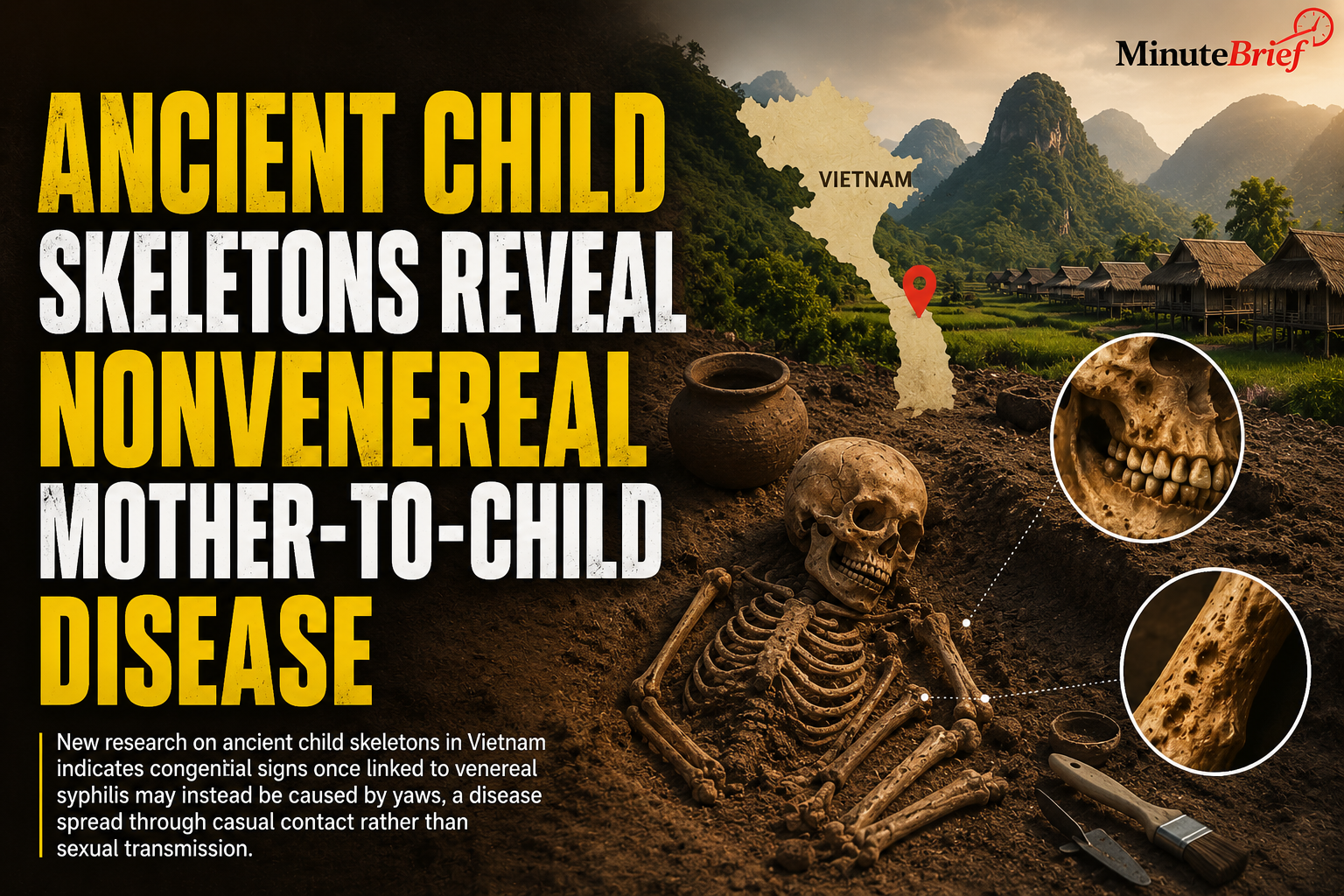
A study published in the International Journal of Osteoarchaelogy on 3,500-year-old child skeletons from Vietnam is upending a long-held belief in medical archaeology: that mother-to-child disease transmission in ancient remains always points to venereal syphilis.
Key Takeaways
- The Discovery: Lead author Dr. Melandri Vlok and researchers analyzed skeletal remains across 16 archaeological sites in Vietnam. They found three children with distinct dental and bone abnormalities showing congenital treponematosis (mother-to-child transmission).
- The Twist: Population patterns at the sites—where infections mostly affected children and adolescents—indicate a non-sexual form of the disease, most likely yaws, which spreads through casual skin contact.
- Why It Matters: Scientists previously relied on congenital signs as a smoking gun for venereal syphilis when tracing its global origins (including the pre-Columbian debate). This discovery shows non-venereal diseases could also pass from mother to child, meaning past cases diagnosed as ancient syphilis may actually be yaws.
- The Challenges: Confirming ancient pathogens remains difficult because heat and humidity in tropical environments like Vietnam degrade DNA quickly, while destructive sampling of remains requires careful ethical considerations and local community partnerships.
Source: Science Daily