In Brief
- Sri Lankan Tamil parties request India to sustain efforts on the Indo-Lanka Accord.
- India’s vice-president assures support for devolution of power in Sri Lanka.
- Discussion held on provincial polls with the Sri Lankan side.
- Efforts highlight the importance of fulfilling Accord commitments for Tamil representation.
What happened
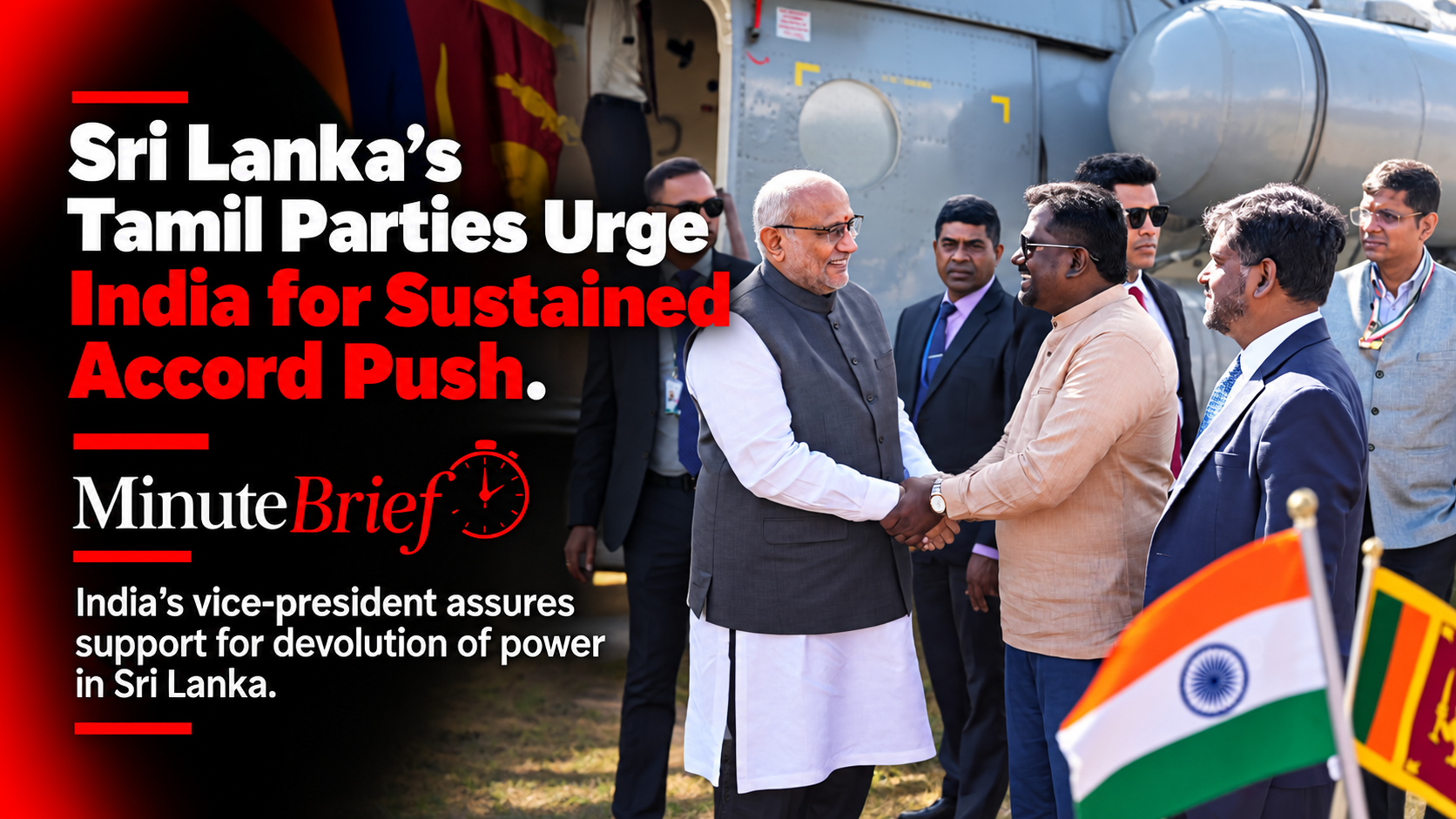
Sri Lanka’s Tamil political parties have called on India for a continued and sustained push to realise the spirit of the Indo-Lanka Accord. They met with India’s vice-president to discuss implementation issues, including the holding of provincial council elections in Sri Lanka.
During the meeting, the Indian vice-president assured the Tamil representatives that India firmly supports the devolution of power as envisaged in the Accord. This reaffirmation signals India’s ongoing interest in ensuring Tamil rights and representation in Sri Lanka’s political framework.
Background
The Indo-Lanka Accord, signed in 1987, aimed to bring peace to Sri Lanka by advocating devolved governance structures, including provincial councils, to address Tamil grievances. However, full implementation has faced delays and challenges over the years, hampering political accommodation for Tamil communities.
Why it matters
The sustained involvement of India remains critical in facilitating dialogue and encouraging Sri Lankan authorities to uphold the Accord’s provisions. The discussion on provincial polls is significant as it represents a practical step toward political inclusion and reconciliation for Tamils in Sri Lanka.
These developments reflect ongoing diplomatic engagement in the region and underscore India’s role as a key stakeholder in promoting regional stability and minority rights.