In Brief
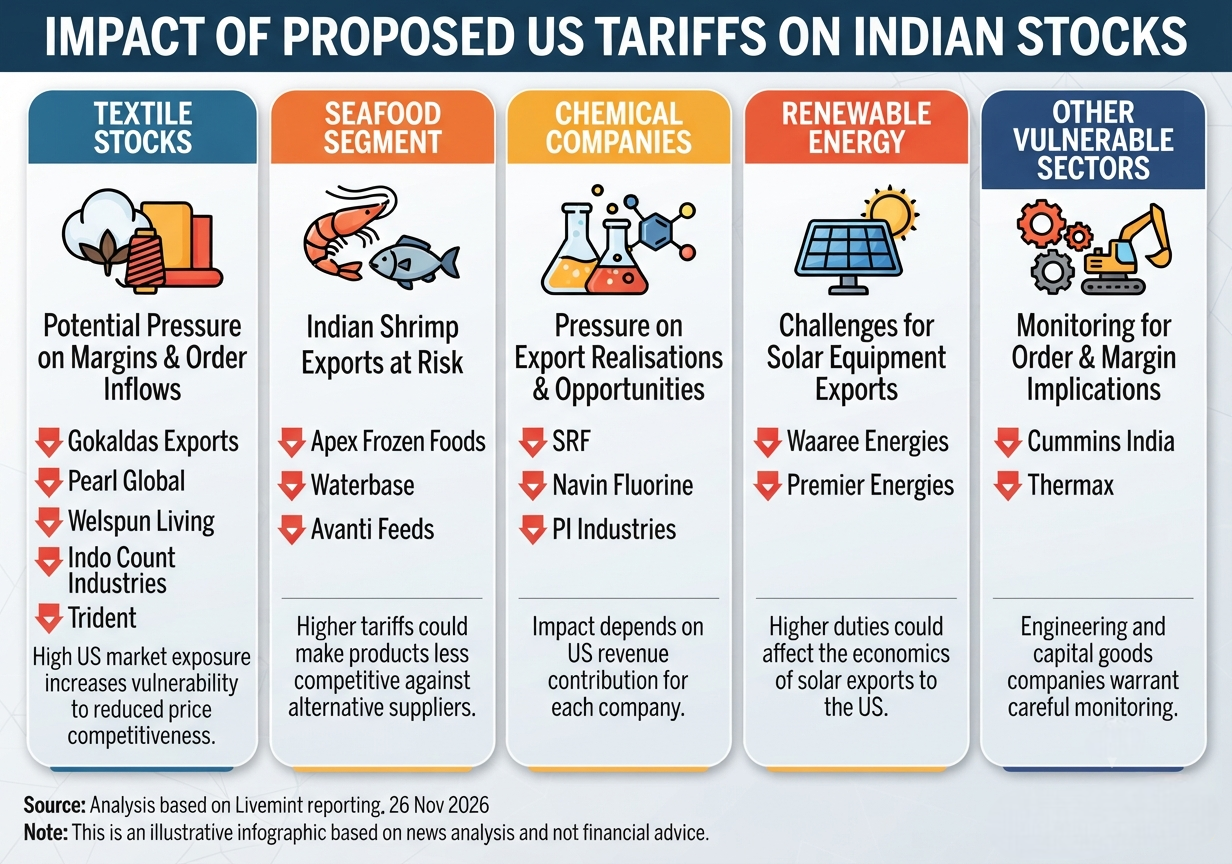
- Gokaldas Exports, Pearl Global, Welspun Living, Indo Count Industries, and Trident face margin compression and slower order inflows due to heavy US retail exposure.
- Apex Frozen Foods, Waterbase, and Avanti Feeds risk losing price competitiveness in the US shrimp market against rival global suppliers.
- Chemical makers (SRF, Navin Fluorine, PI Industries) and solar module exporters (Waaree Energies, Premier Energies) face pressure on export realisations and project economics.
- Capital goods firms (Cummins India, Thermax) warrant monitoring, while IT services (unaffected by merchandise duties) and domestic-focused banking and power stocks offer relative shelter.
Sector-by-Sector Impact on Indian Equities
Announced by the USTR on November 25, 2026, under Section 301 of the US Trade Act of 1974, the proposed levies target 14 economies—including India—over alleged manufacturing overcapacity across sectors such as textiles, solar modules, petrochemicals, steel, construction materials, and automotive goods. Market analysts note that while exemptions cover roughly 35–40% of Indian exports (such as smartphones and generic pharmaceuticals), several listed exporters remain vulnerable:
- Textiles & Home Linens: Gokaldas Exports, Pearl Global, Welspun Living, Indo Count Industries, and Trident derive significant revenue from US apparel and home-textile buyers, making them sensitive to higher import duties that erode pricing power against competing Asian suppliers.
- Seafood Segment: Apex Frozen Foods, Waterbase, and Avanti Feeds could see Indian shrimp exports become less competitive in the US market, weighing on volumes and margins.
- Specialty Chemicals: SRF, Navin Fluorine, and PI Industries may face pressure on export realisations and new contract wins depending on their individual US revenue share.
- Renewable Energy & Capital Goods: Solar equipment manufacturers Waaree Energies and Premier Energies could see US export economics strained, while engineering firms Cummins India and Thermax warrant close monitoring for order and margin implications.
Trade Deal Cushion and Domestic Safe Havens
Strategists emphasize that the impact is likely to stay stock-specific rather than trigger a broad market sell-off. Because the Section 301 action applies strictly to physical goods, Indian IT services companies are shielded from direct tariff fallout, while domestically anchored sectors such as banking and power remain well-insulated.
Furthermore, the USTR proposal explicitly leaves room to lower the additional duty from 25% to 17% if India and the United States conclude their pending bilateral trade agreement—potentially preserving a 1–3 percentage point tariff advantage for Indian exporters over regional peers ahead of public hearings scheduled for January 25, 2027.