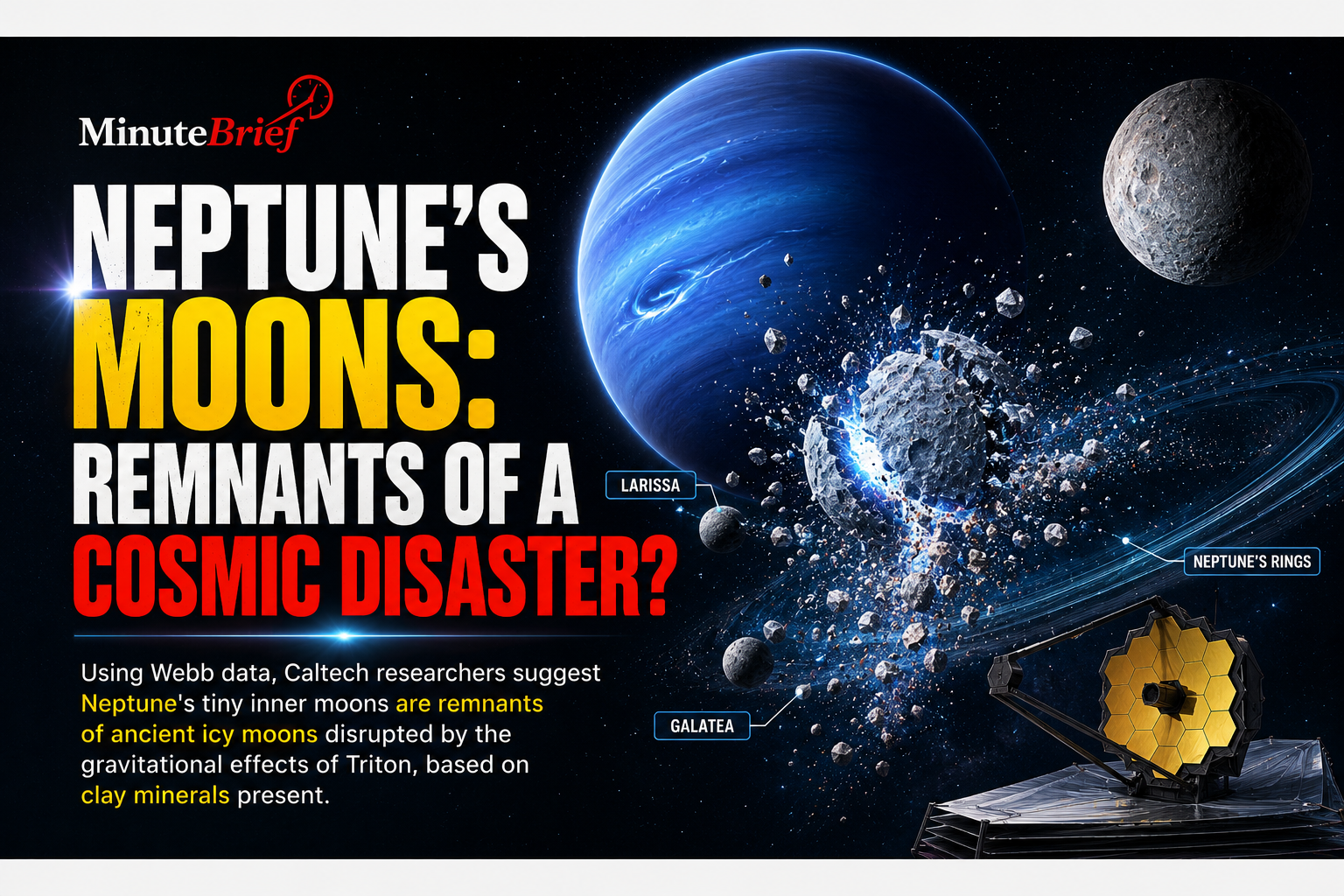
Using NASA’s James Webb Space Telescope, Caltech researchers discovered that Neptune's tiny inner moons may be the remains of an ancient cosmic catastrophe.
Key Takeaways
- Surprise Minerals: Webb detected phyllosilicates (clay minerals formed by liquid water) on Larissa, Galatea, and Neptune’s rings—yet the moons have no water ice today.
- Deep Interiors Exposed: Because forming clay requires significant heat and water, this material likely came from deep inside much larger, ancient icy moons.
- Shattered by Triton: Scientists believe the capture of Neptune’s massive moon, Triton, triggered a violent smashup that destroyed its original satellites, leaving behind debris that reformed into today's small inner moons.
Source: Science Daily