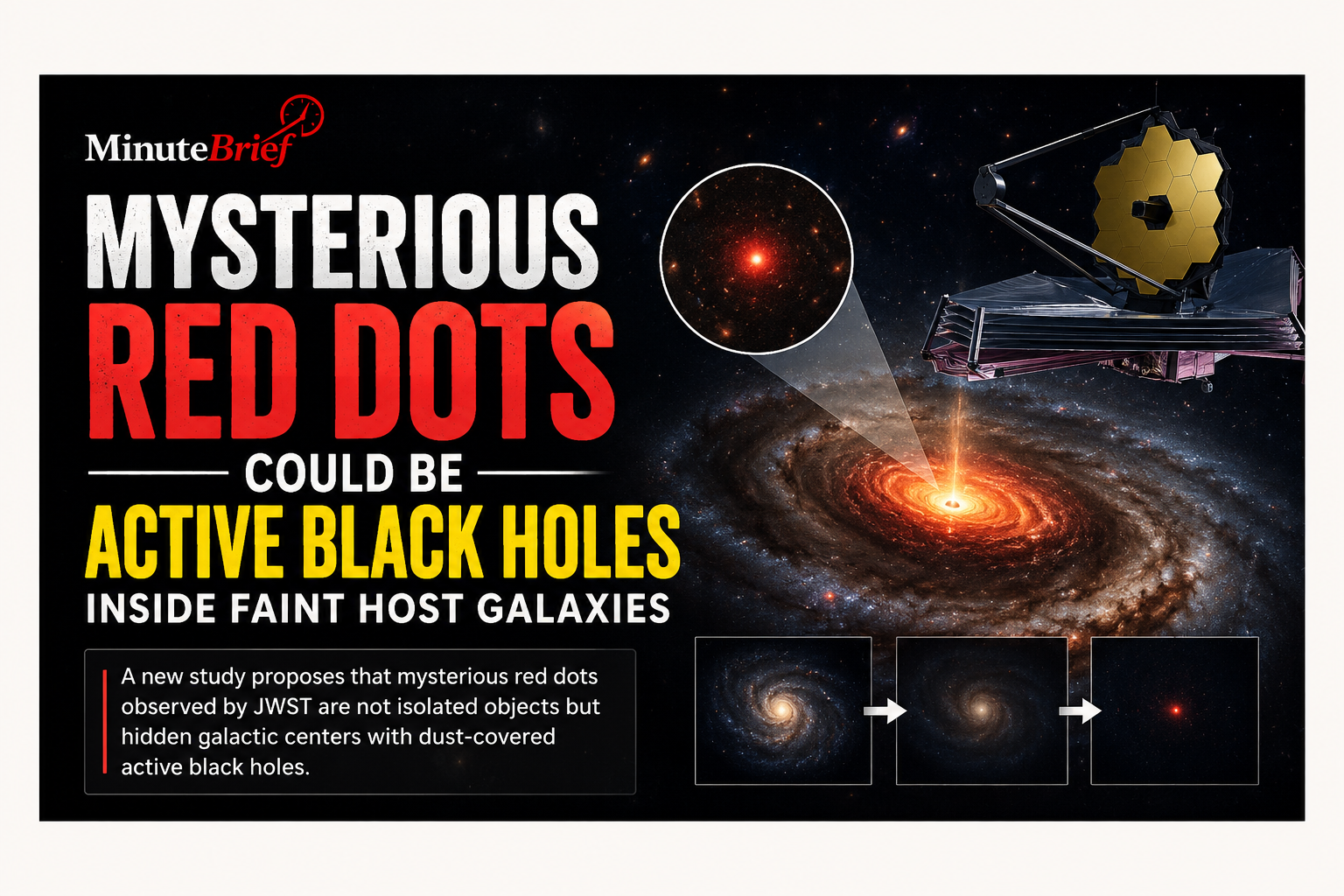
Astronomers using the James Webb Space Telescope (JWST) may have solved the mystery of the early universe’s "little red dots," but researchers emphasize that this hypothesis might not explain every single object.
- A Potential Clue: A study published in The Astrophysical Journal suggests these glowing points could simply be the hidden centers of full-fledged galaxies rather than a strange, extinct class of isolated objects.
- The "Iceberg" Effect: When scientists digitally simulated moving the closer "Saguaro" spiral galaxy further back in time, its faint arms faded out. This indicates that distant red dots might look isolated due to observational bias—their surrounding stars may just be too faint for telescopes to see across billions of light-years.
- Possible Black Hole Engines: The bright centers appear to be heavily dust-obscured supermassive black holes actively consuming gas, which could mean the dots represent only a temporary, passing phase in galaxy evolution.
While these results offer a compelling theoretical bridge, astronomers caution that more observations are needed to confirm whether this scenario applies universally or just to a fraction of the population.
Source: Science Daily