In Brief
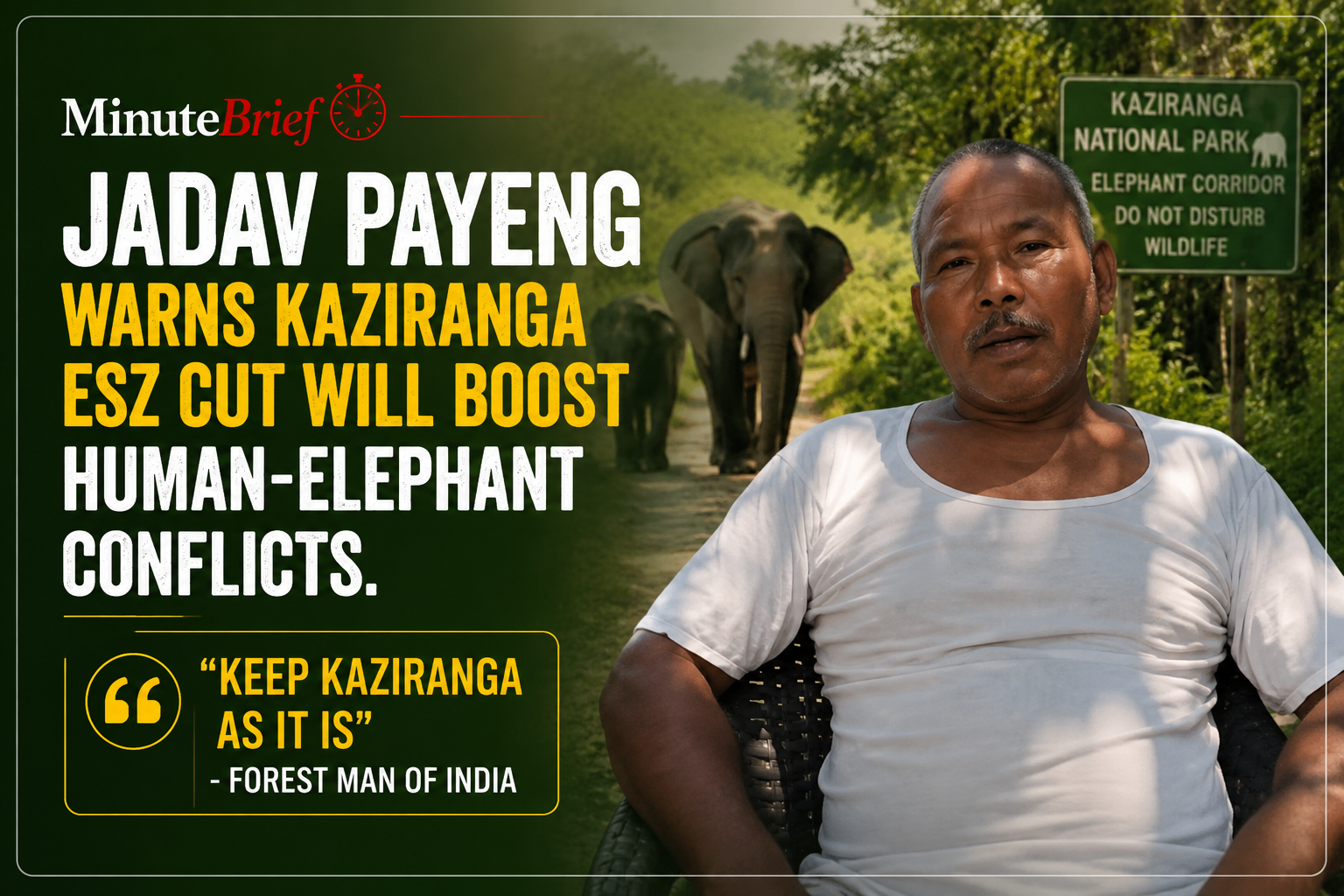
- Jadav Payeng warns human-elephant conflicts will increase due to Kaziranga ESZ reduction.
- The reduction in ESZ from 10km to 1km, threatens wildlife habitats and local communities near Kaziranga National Park.
- Experts highlight risks of shrinking buffer zones for protected wildlife areas.
- Concerns raised about longer-term impacts on both elephants and people in Assam.
Renowned environmentalist Jadav Payeng has raised alarms about a probable rise in human-elephant conflicts after the eco-sensitive zone (ESZ) around Kaziranga National Park was reduced. The ESZ acts as a protective buffer between the park and nearby human settlements.
According to Payeng, this trimming of the ESZ not only threatens the habitat of elephants but also increases the chances of encounters between wild elephants and local communities, potentially leading to casualties and property damage.
Kaziranga National Park, located in Assam, is home to a significant population of the Indian one-horned rhinoceros and Asian elephants. Conservationists argue that maintaining a sufficient ESZ is critical to safeguarding wildlife and minimizing conflicts.
The decrease in buffer zones may force elephants to venture closer to inhabited areas in search of food and space, further escalating conflict situations. Payeng's concerns reflect broader ecological and social challenges arising from changes to protected area boundaries.