In Brief
- DST denies INSPIRE grants to students who fail or miss exams.
- New rules prioritize top-1% students in integrated MSc and BS-MS courses.
- Revised guidelines introduce course-wise preference order for scholarships.
- Policy aims to target high-performing students in science education.
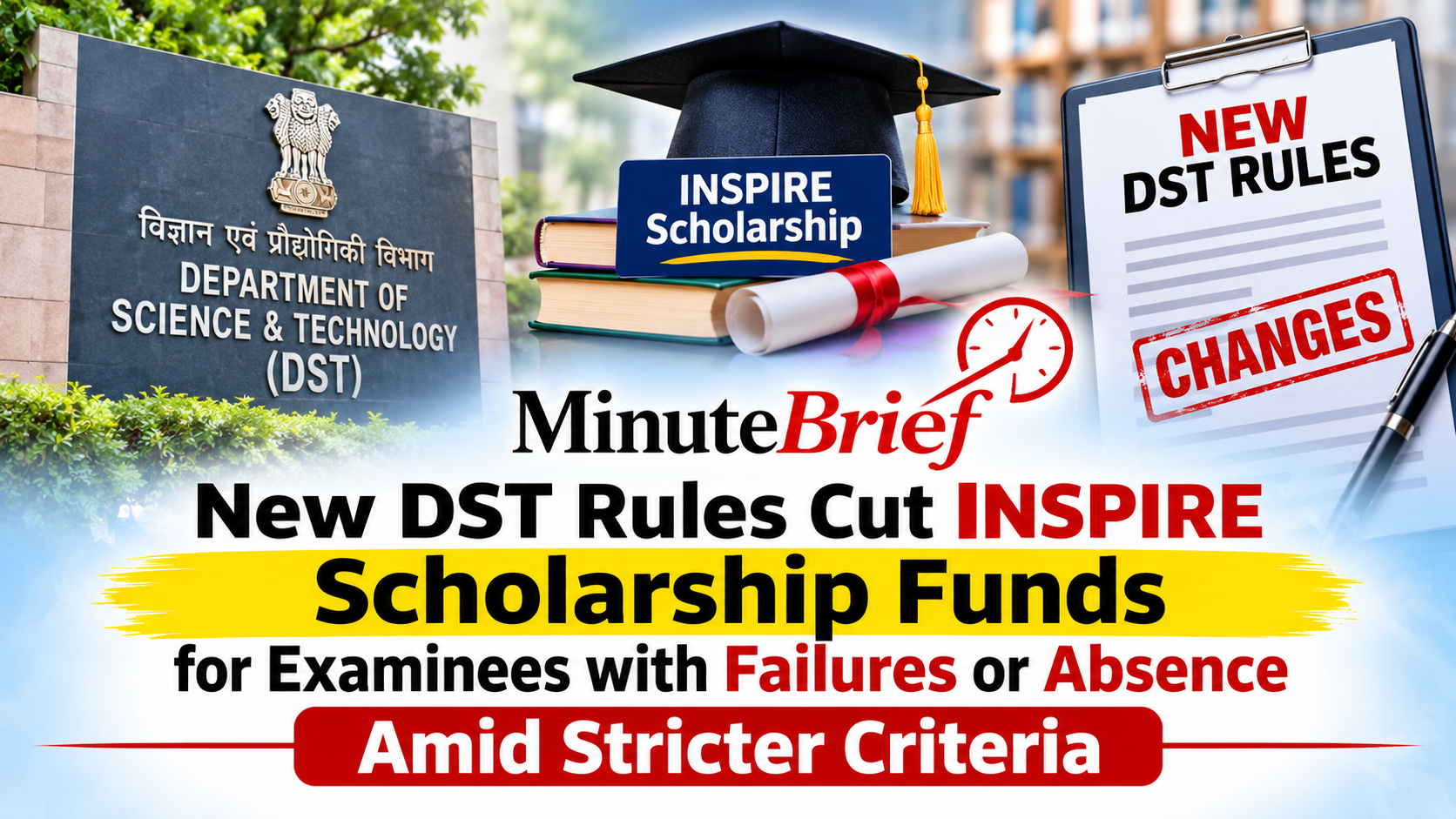
The Department of Science and Technology (DST) has revised its INSPIRE (Innovation in Science Pursuit for Inspired Research) scholarship guidelines to restrict disbursal of funds. According to officials, students who fail or miss examination will no longer be eligible to receive the scholarship grant under the new rules.
The updated guidelines introduce a course-wise preference order that prioritises students ranking in the top 1% in integrated MSc and BS-MS programmes, aiming to focus the scholarship on high academic achievers. This move marks a shift towards stricter performance-based criteria for support under the DST’s flagship science talent nurturing scheme.
The INSPIRE programme was established to attract and retain talented students in the science stream across India. The revised criteria intend to enhance selectivity and ensure effective utilisation of funds by directing scholarships to consistently performing candidates.
The DST statement highlighted the emphasis on academic excellence, stating that grant recipients must maintain qualifying performance standards. Preliminary reports indicate the new measures could impact a considerable number of existing recipients who do not meet these updated requirements.
Observers note that such modifications reflect efforts by the government to optimise scholarships for fostering quality science education and research talent nationwide. Continued monitoring will assess the impact of these guidelines on student performance and scholarship distribution.