In Brief
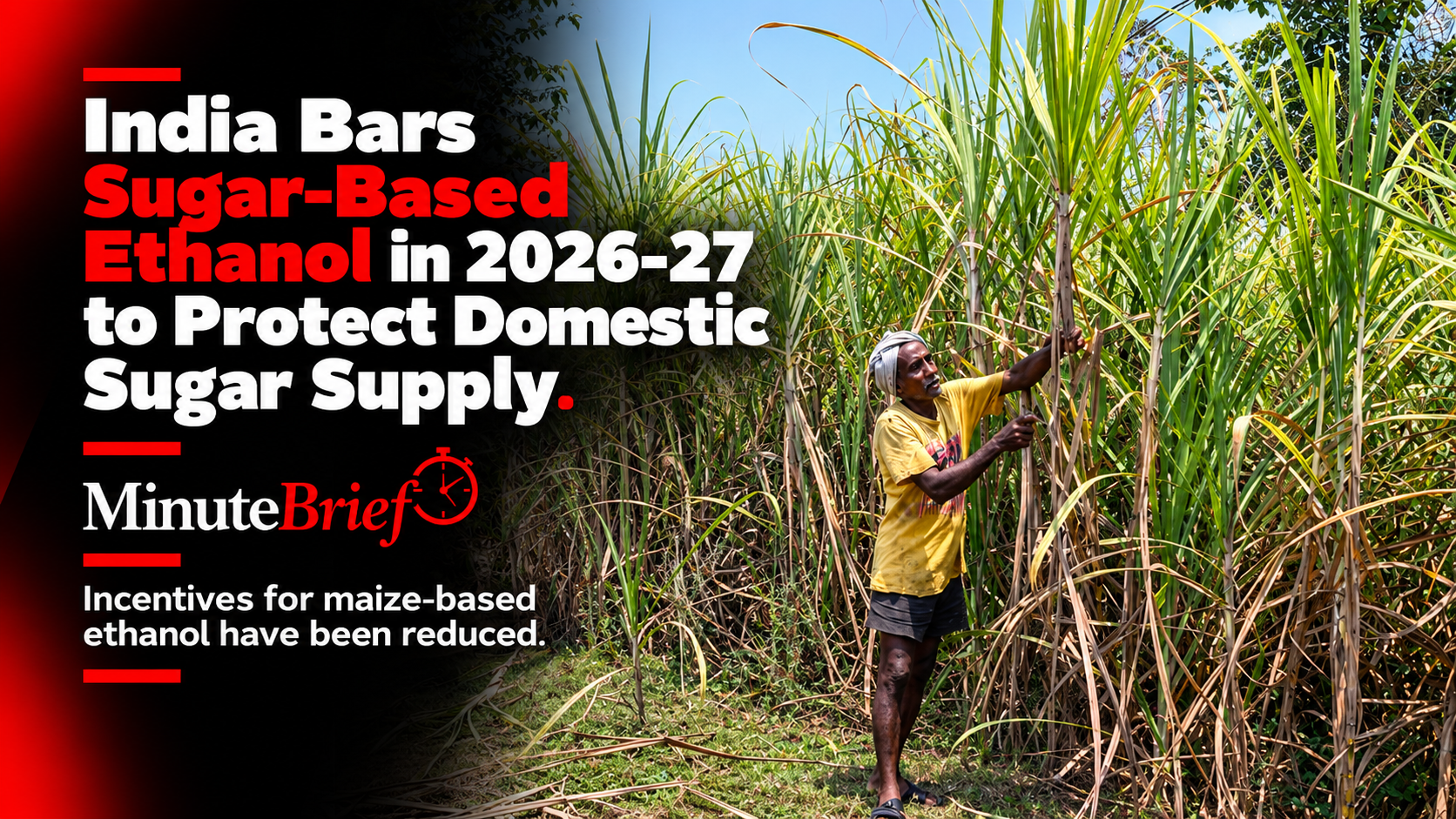
- India bars sugar-based ethanol in the 2026-27 tender.
- The decision aims to secure domestic sugar availability amid poor rainfall.
- Incentives for maize-based ethanol have been reduced.
- Measures respond to risks of lower sugar output in Maharashtra and Karnataka.
India bars sugar-based ethanol in 2026-27 tender amid supply concerns
The government of India has excluded sugar-based ethanol from the 2026-27 ethanol procurement tender, citing concerns over domestic sugar availability. This move follows poor rainfall in major sugar-producing states such as Maharashtra and Karnataka, which has raised the risk of reduced sugarcane output and rising sugar prices.
The Ministry of Petroleum and Natural Gas, responsible for ethanol procurement, also announced a cut in the incentive rates for maize-based ethanol production for the same period. These steps aim to mitigate the impact on domestic edible sugar supplies while balancing ethanol requirements for fuel blending.
Authorities noted that the 2026-27 tender will focus on ethanol sourced from non-sugar feedstocks to ensure the domestic sugar market is protected during a period of anticipated shortfall. This policy shift reflects the government's approach to safeguarding essential commodities while supporting the ethanol blending programme, which aims to reduce dependency on fossil fuels.
Industry stakeholders are monitoring these changes closely, as the adjustment in feedstock eligibility and incentives may influence ethanol production patterns and agricultural practices ahead. The government has emphasized the need to maintain a sustainable balance between food security and energy goals amid fluctuating monsoon patterns.