KEY FACTS
- Keratin from sheep’s wool aided damaged bone regeneration in animal studies.
- The new scaffold produced tissue more like healthy bone than collagen scaffolds.
- Sheep wool keratin offers a promising, abundant material for regenerative medicine.
- The discovery could transform agricultural waste into valuable biomedical resources.
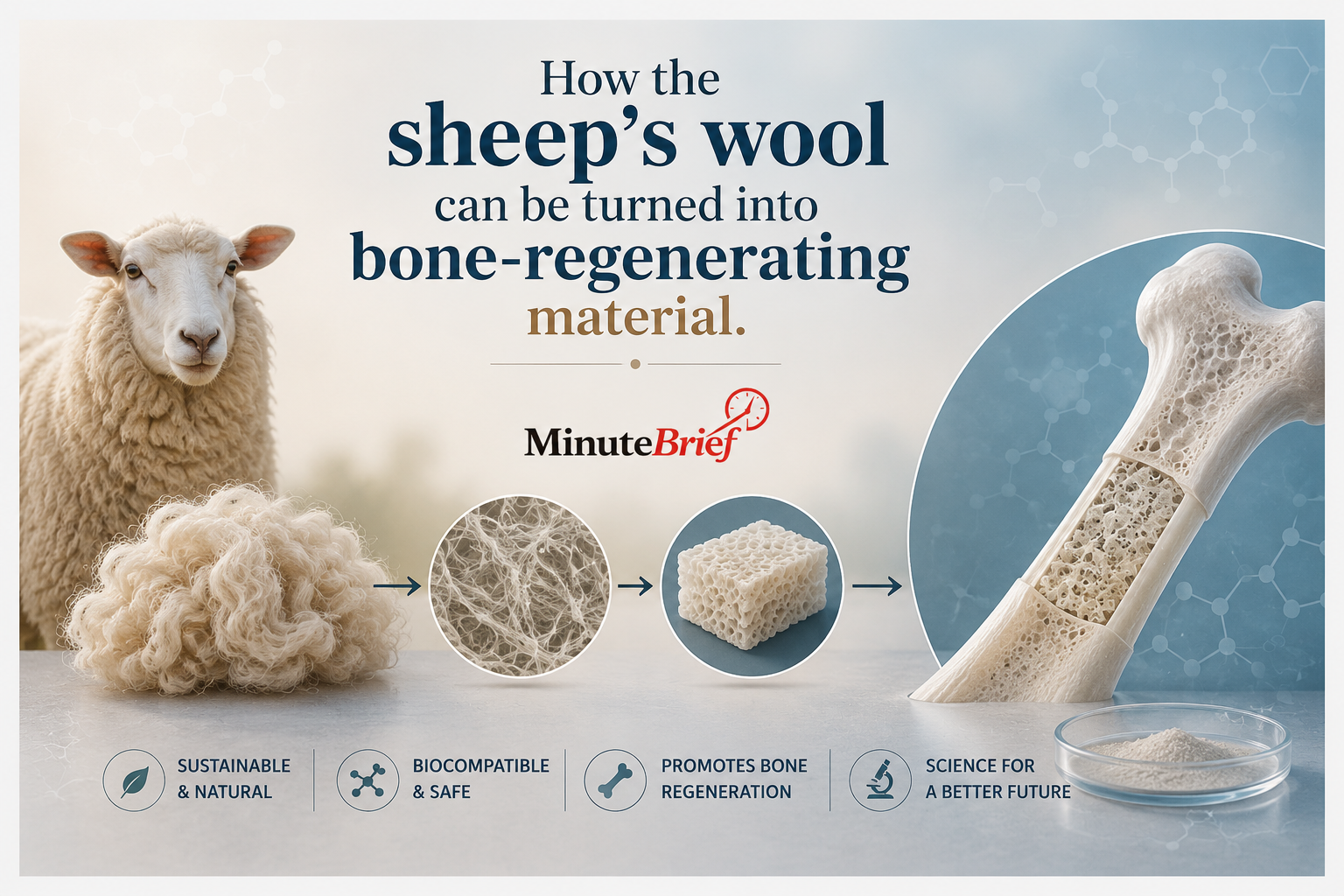
Researchers have developed a novel bone-regenerating material by extracting keratin from sheep’s wool. This material served as a scaffold, supporting the regeneration of damaged bone in animal experiments. The regenerated tissue displayed a higher degree of organization and structural similarity to healthy bone compared to tissue grown using traditional collagen scaffolds.
The researchers emphasized the potential of this discovery to utilize sheep’s wool, an abundant agricultural byproduct, in developing new regenerative therapies. By converting waste material into biomedical scaffolds, this approach may lead to more effective and sustainable treatments for bone repair and regeneration.
The study highlights keratin’s unique properties that contribute to improved bone tissue formation. This advancement opens avenues for further investigation into keratin-based scaffolds in clinical applications, potentially enhancing recovery for patients with bone injuries.