In Brief
- EAM S. Jaishankar noted that the term "middle power" feels restrictive and fails to capture India's true global weight.
- He highlighted that India is the world's most populous country with a Gross Domestic Product (GDP) of about $4 trillion and substantial future growth projections.
- Asserting that India is "more than a middle power," Jaishankar described the nation as a "power in the middle" that should pursue independent policies and forge strategic arrangements with fellow nations.
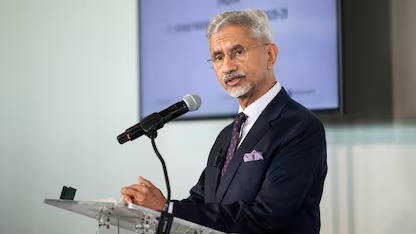
External Affairs Minister S. Jaishankar offered a detailed perspective on India's evolving foreign policy framework, explaining the rationale behind New Delhi's rejection of traditional geopolitical categorizations such as the "middle power" label.
Speaking on India's diplomatic identity, Jaishankar argued that standard classifications are fundamentally limiting for a nation of India's demographic and economic magnitude. With a population making it the largest in the world and an expanding economy crossing the $4 trillion threshold alongside robust growth forecasts, India occupies a distinct tier in international affairs.
"More than a middle power, in a way, we are powers in the middle," Jaishankar remarked, highlighting the country's strategic geographic and diplomatic positioning. He further emphasized that emerging global actors should independently pursue their core national interests, formulate autonomous foreign policies, and build collaborative frameworks with one another rather than adhering to rigid Western-centric power hierarchies.