In Brief:
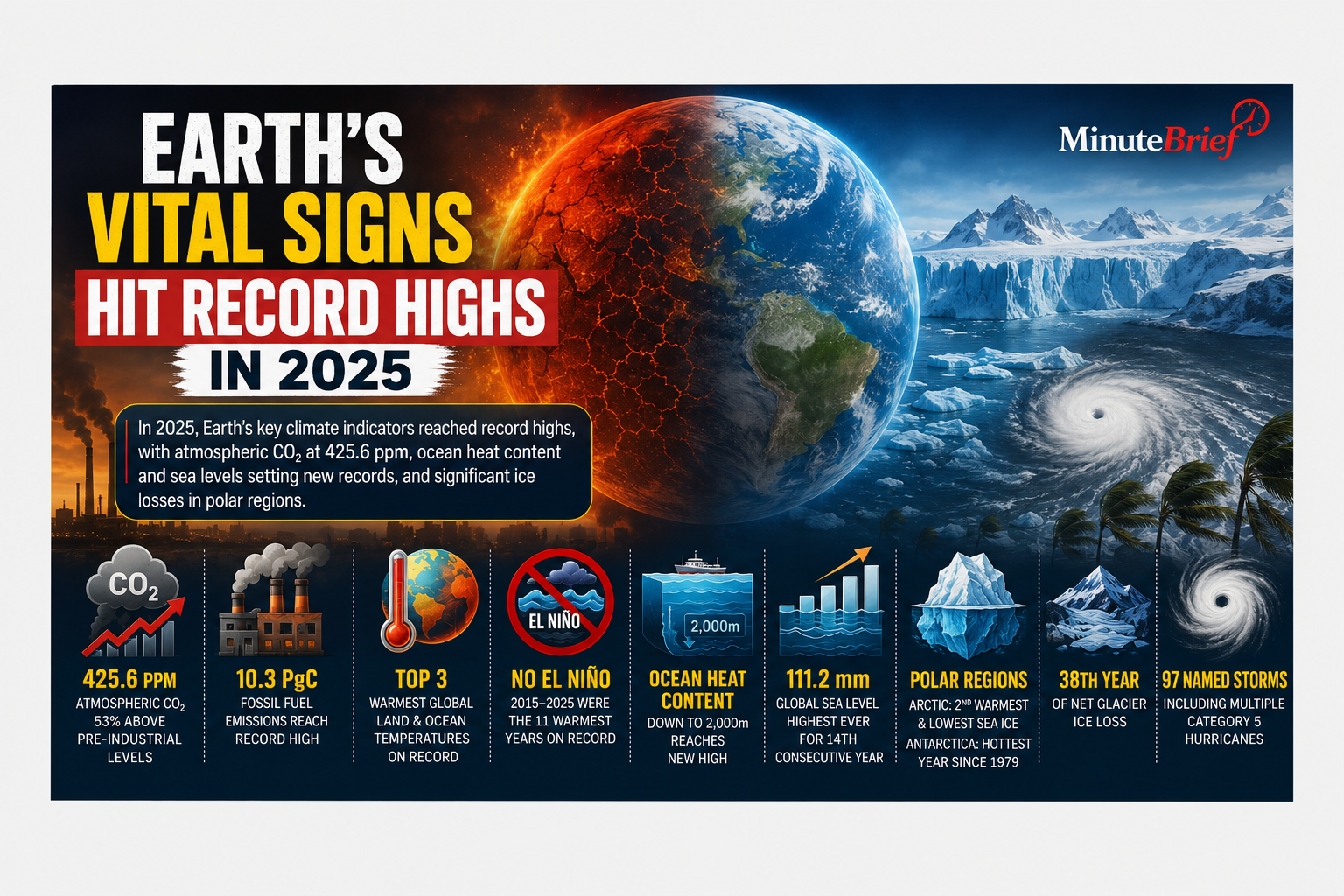
- CO2 hit a record 425.6 ppm due to 10.3 petagrams of carbon emissions.
- 2025 ranked among the top three hottest years, keeping 2015–2025 as the 11 warmest years on record.
- Ocean heat hit a record high, and sea levels rose to a peak 111.2 mm above 1993 baselines.
- Antarctica had its hottest year, Arctic sea ice hit record lows, and glaciers shrank for a 38th straight year.
- 97 tropical cyclones formed globally, including five Category 5 storms like Hurricane Melissa.
Earth’s key climate indicators reached unprecedented levels in 2025. Greenhouse gas concentrations hit record highs—with atmospheric carbon dioxide reaching 425.6 parts per million (53% above pre-industrial levels) and fossil fuel emissions climbing to 10.3 petagrams of carbon—driving global land and ocean surface temperatures to rank among the top three warmest on record.
Notably, these extreme temperatures occurred without an El Niño event, solidifying 2015 through 2025 as the eleven warmest years ever logged. Ocean heat content down to 2,000 meters deep reached a new high, while global sea levels set a record for the 14th consecutive year, reaching 111.2 millimeters above 1993 baselines.
Polar regions suffered severe loss as the Arctic logged its second-warmest year alongside the lowest maximum sea ice extent on record, and Antarctica registered its hottest year since record-keeping began in 1979. Accompanied by a 38th consecutive year of net glacier ice loss and elevated tropical cyclone activity—including 97 named storms and destructive Category 5 hurricanes—the report highlights accelerating shifts across the planet's vital climate systems.
Source: earth.com