In Brief
- Delhi's AQI rose sharply to 324, reaching the 'very poor' category.
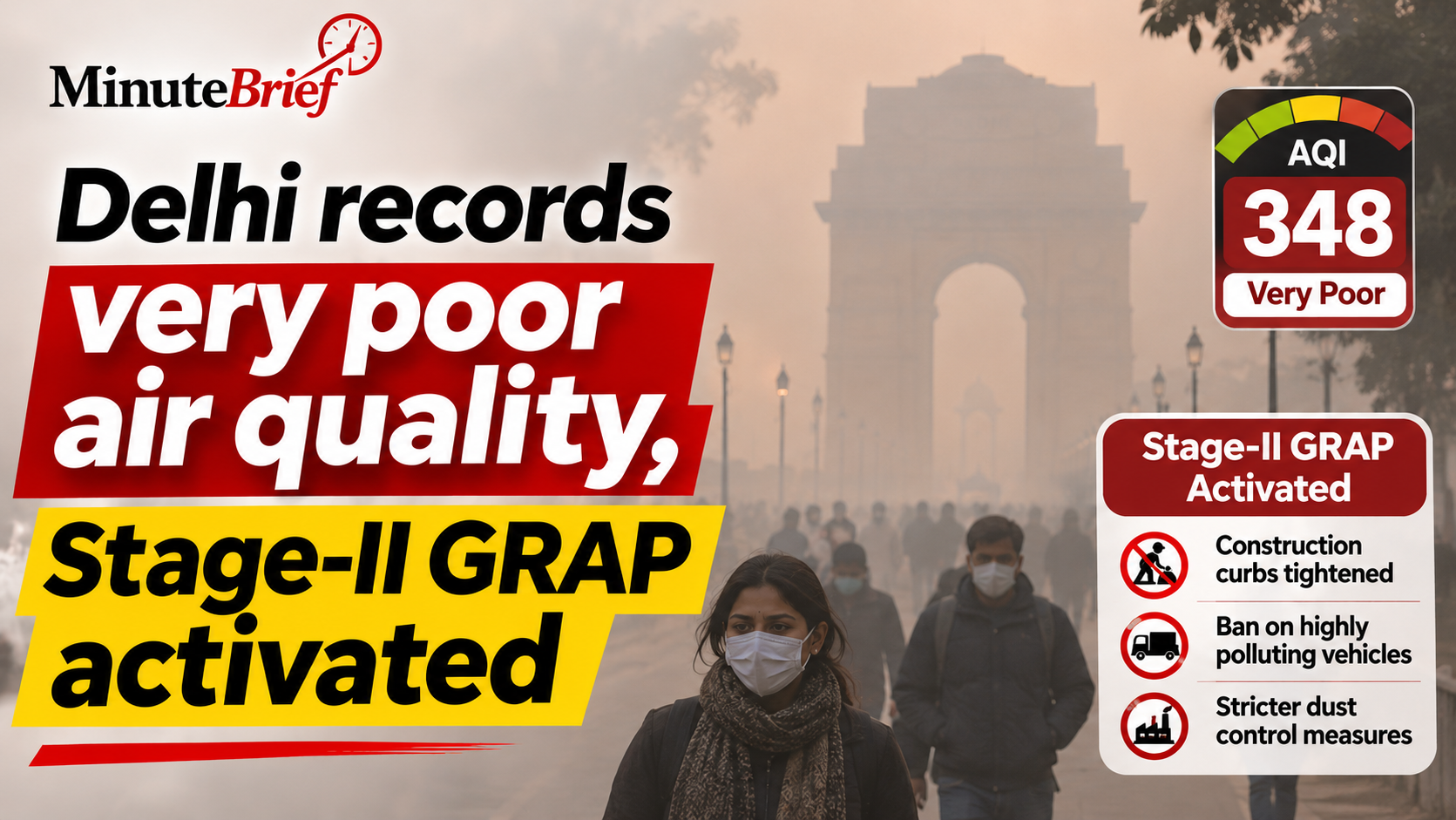
- Stage-II of the Graded Response Action Plan (GRAP) was invoked to address pollution.
- AQI jumped from 117 on October 31 to 261 on November 1, then 324 on November 2.
- Activation of GRAP shows government’s response to worsening air quality.
Delhi experienced a significant deterioration in air quality, with the Air Quality Index (AQI) climbing to 324 on November 2, categorizing it as ‘very poor’. This sharp rise prompted the Central Pollution Control Board’s (CPCB) Commission for Air Quality Management (CAQM) to invoke Stage-II of the Graded Response Action Plan (GRAP) aimed at mitigating pollution levels.
The CAQM's GRAP sub-committee highlighted the rapid escalation in pollution: from an AQI of 117 (moderate) on October 31, to 261 (poor) on November 1, culminating in the very poor classification on November 2. The move to Stage-II GRAP introduces stricter pollution control measures including restrictions on construction activities, enhanced monitoring, and other mitigation efforts.
These steps are crucial as Delhi’s air quality deteriorates rapidly during the winter months, increasing health risks for residents. The government’s proactive invocation of GRAP demonstrates its commitment to tackling worsening air pollution and protecting public health.