In Brief:
- Somatic DNA mutations set an upper limit on human survival, even if all diseases are eliminated.
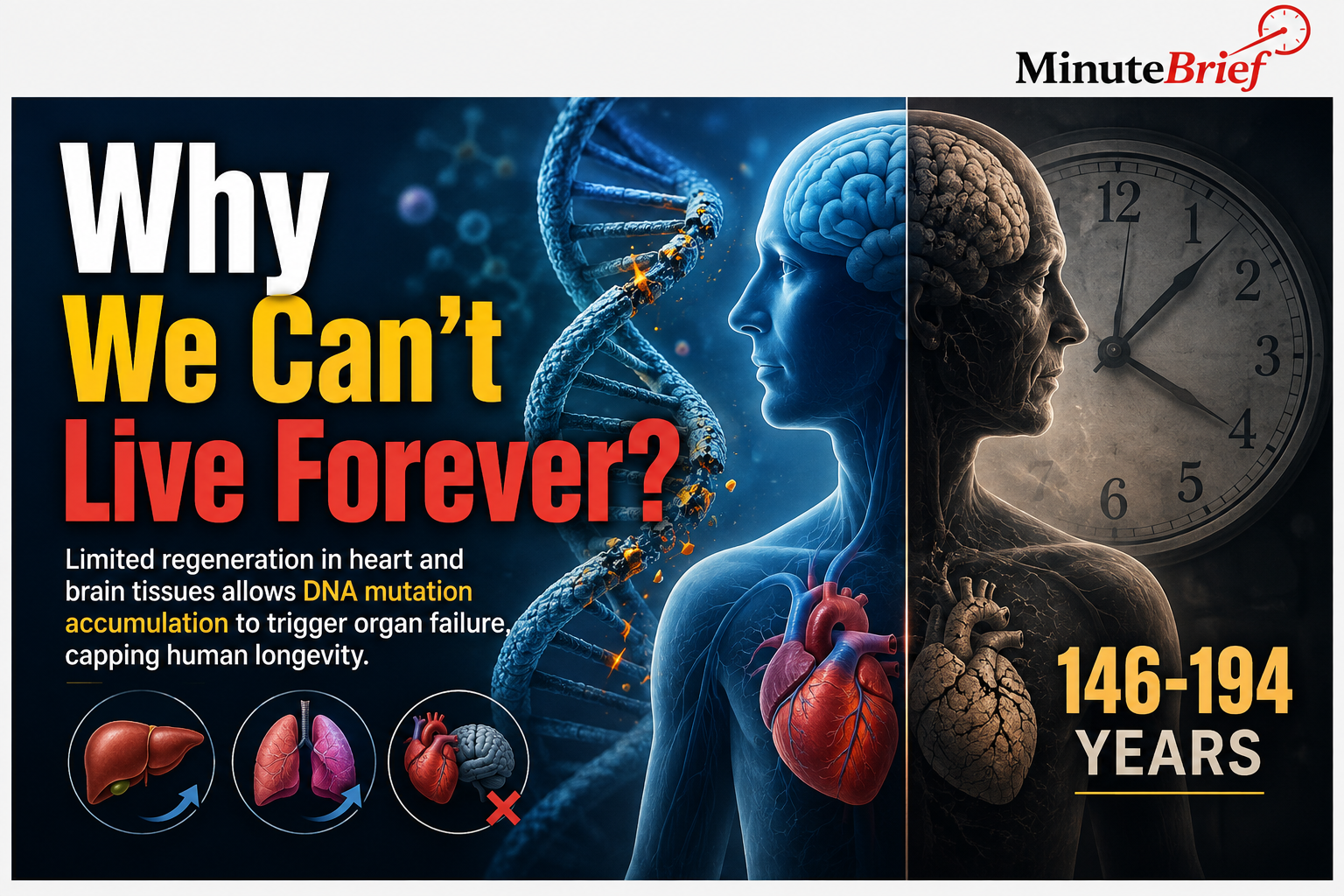
- Modeling estimates a maximum lifespan of 146–194 years.
- Low regeneration in heart and brain tissues allows accumulated cell damage to eventually trigger organ failure.
- The model tests one potential aging mechanism based on assumptions, rather than a definitive prediction.
A study by researchers at the Skolkovo Institute of Science and Technology in Moscow suggests that naturally occurring genetic changes in cells—known as somatic mutations—could set a biological upper limit on human lifespan, even if all other reversible causes of aging and disease were eliminated.
Using mathematical modeling, the researchers estimated that under such hypothetical conditions, a typical human could live between 146 and 194 years, with some individuals potentially surviving longer. The study highlights that while organs like the liver and lungs can regenerate, vital tissues in the heart and brain have limited regenerative capacity, making the accumulation of uncorrected DNA copying errors over decades a crucial factor in organ failure.
However, experts emphasize that this model examines only one potential mechanism of aging and relies on speculative assumptions, meaning it offers one plausible explanation for human longevity limits rather than a definitive prediction.
Source: earth.com