In Brief
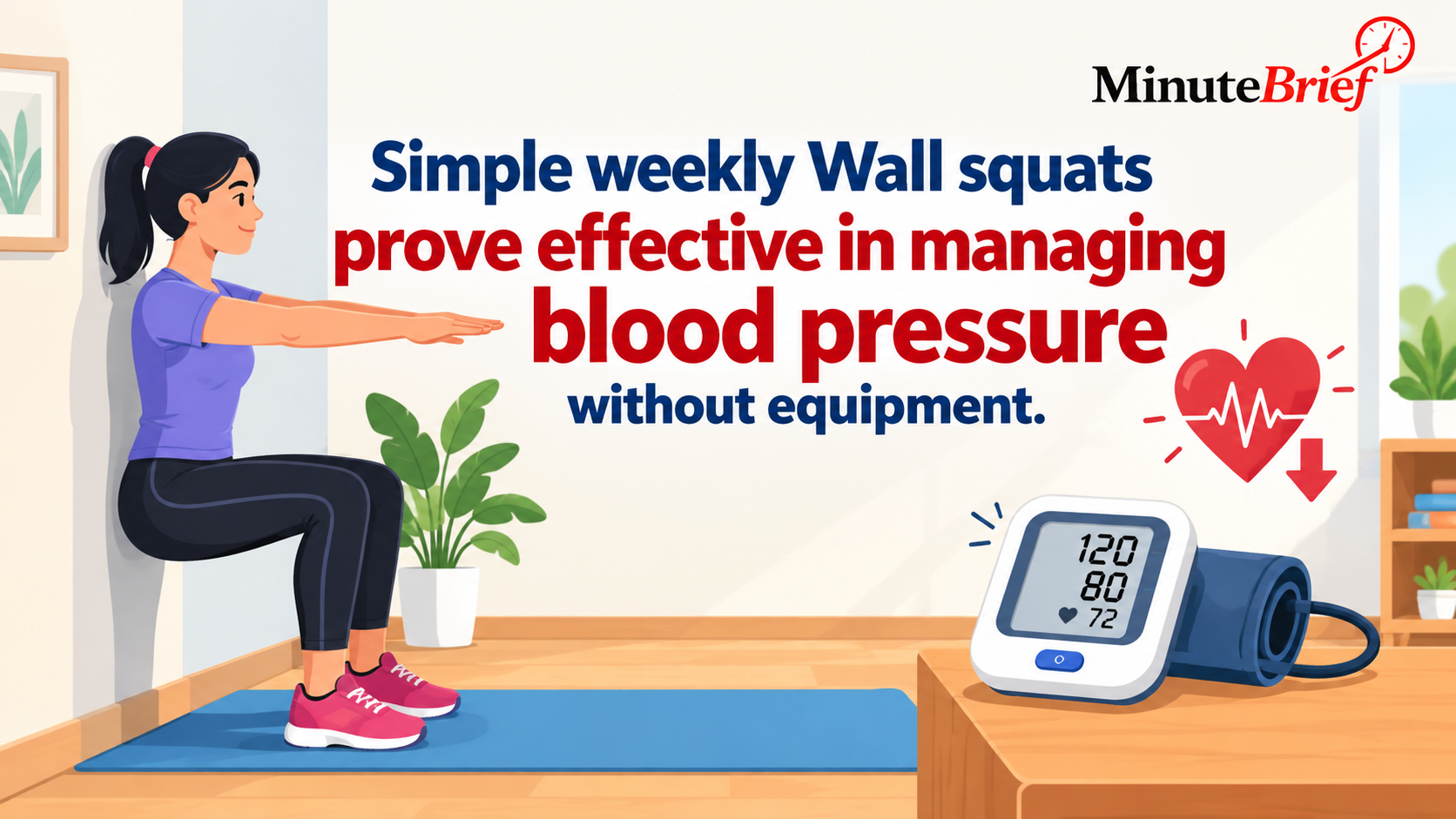
- Wall squats once or twice a week reduce systolic blood pressure.
- Study shows benefits without need for daily exercise or equipment.
- Effect maintained short term among 100 adult participants.
- Exercise offers a convenient, low-cost method to manage blood pressure.
Study finds simple wall squats lower blood pressure
A new study reveals that performing wall squats just once or twice weekly can help lower systolic blood pressure in adults. This finding suggests a straightforward, accessible exercise method for blood pressure management without the need for daily workouts or costly equipment.
The research involved 100 adult participants who incorporated wall squats into their routine. Over the short term, those practicing this exercise maintained a significant reduction in systolic blood pressure, an important factor in cardiovascular health.
The simplicity of wall squats—requiring only a flat wall and no special gear—makes it a practical option for many individuals, including those with time constraints or limited access to fitness facilities. This could offer a manageable and cost-effective approach to blood pressure control on a population scale.
Experts emphasize the importance of maintaining cardiovascular health, and this study provides evidence that minimal yet regular exercise can play a critical role. While the study focused on short-term effects, it may encourage further research into long-term benefits and broader applications in preventive healthcare.