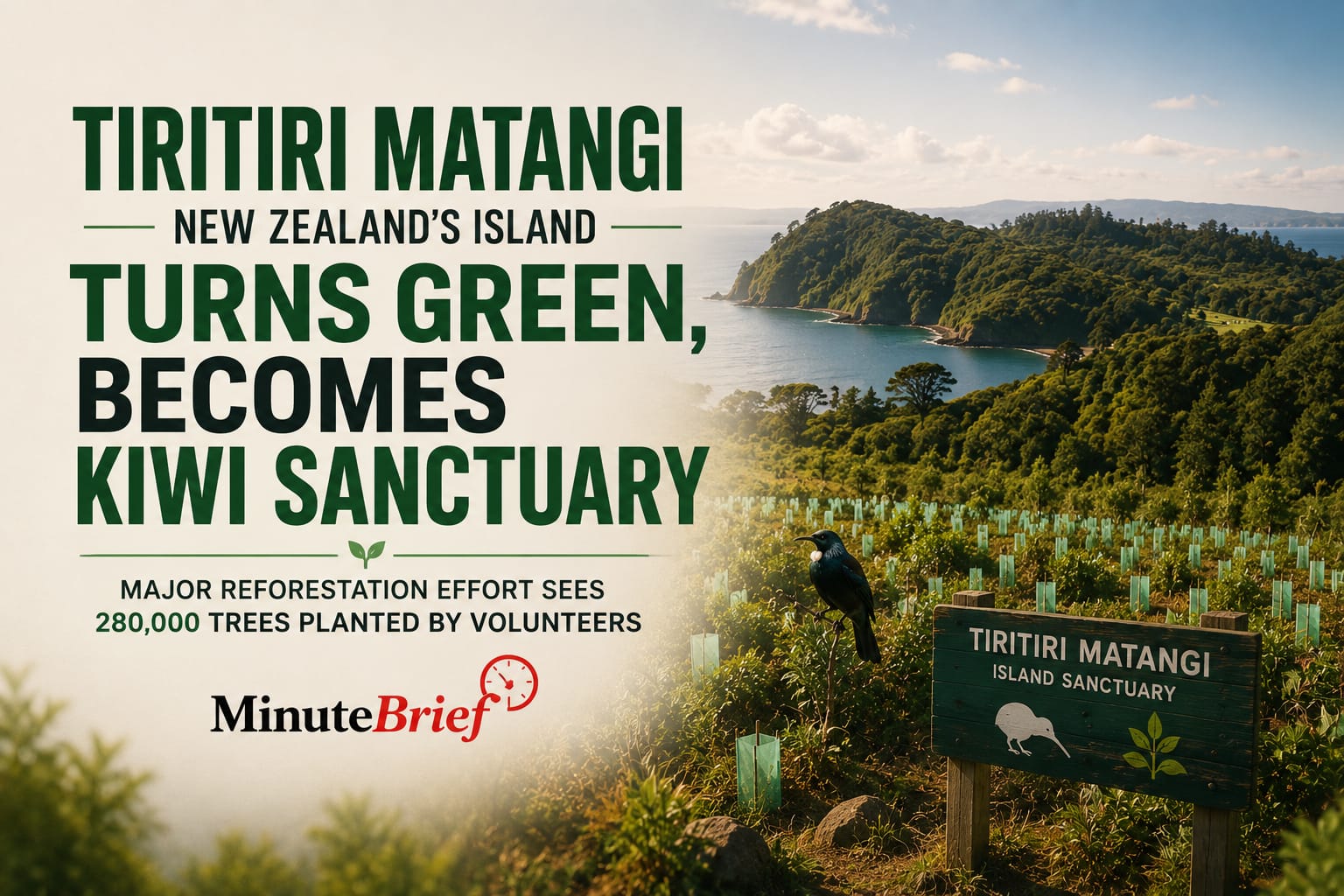
In Brief:
- Volunteers planted around 280,000 native trees on New Zealand's Tiritiri Matangi Island between 1984 and 1994.
- The initiative transformed farmland cleared for grazing into a predator-free, thriving wildlife sanctuary.
- The island now protects rare native species including the takahē, kōkāko, and tuatara.
- Managed with Supporters of Tiritiri Matangi, it serves as a global benchmark for community conservation.
New Zealand’s Tiritiri Matangi Island, situated in the Hauraki Gulf near Auckland, has undergone a remarkable ecological transformation. Over a decade-long period starting in 1984, dedicated volunteers planted around 280,000 native trees, transforming a degraded farm landscape into a flourishing open wildlife sanctuary.
Driven by community dedication and a partnership with New Zealand's Department of Conservation and the Supporters of Tiritiri Matangi, the project restored native ecosystems and eliminated introduced mammalian predators.