In Brief
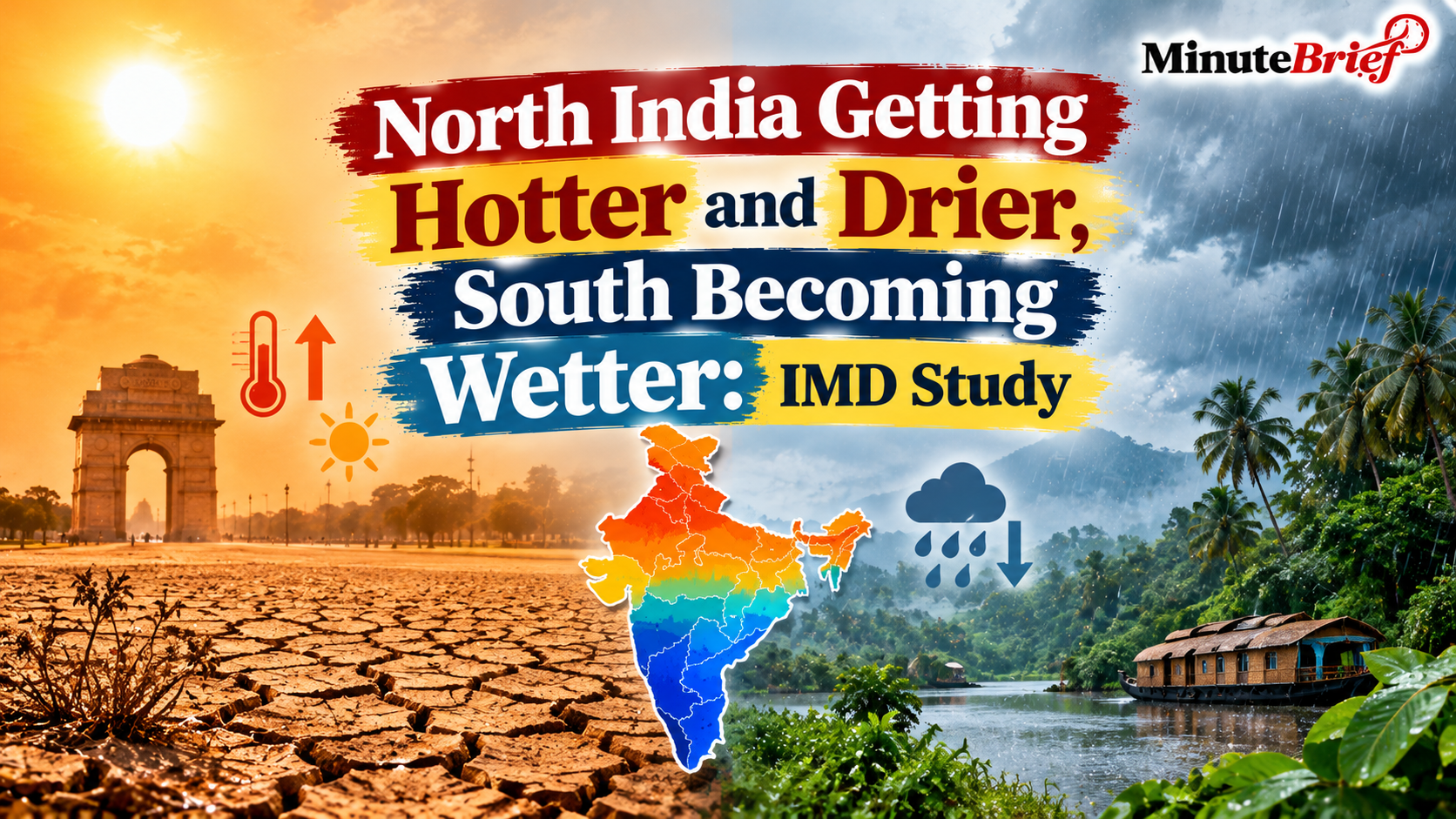
- The hot semi-arid climate zone in Northwest India expanded from 25% (1951–1980) to nearly 33% (1991–2020).
- The temperate climate zone in the north shrank from 25% to less than 20%, reflecting widespread warming and declining rainfall.
- In Peninsular India, the hot semi-arid region reduced from 30% to 16%, with much of the area transitioning into the wetter tropical savannah zone.
- Lead IMD Pune author Ananya Karmakar emphasized that the eastward creep of the dry zone into Uttar Pradesh requires urgent adjustments to crop sowing and harvesting schedules.
Mapping 70 Years of Regional Climate Shifts
Published in the IMD journal Mausam, the study analyzed historical temperature and rainfall data from 1951 through 2020 by comparing overlapping 30-year blocks.
The findings confirm that India's long-established regional climate boundaries are actively altering, driven by rising global temperatures and shifting monsoon dynamics.
Agricultural and Policy Implications
The eastward push of the dry zone into fertile regions like eastern Uttar Pradesh poses immediate operational challenges for the nation's agrarian sector. IMD scientists highlighted that while peninsular India is experiencing increased overall moisture, the north's persistent drying trends necessitate updated regional water management and climate-adaptive farming strategies.